 We ship worldwide
 Top customer satisfaction!
 Many payment options

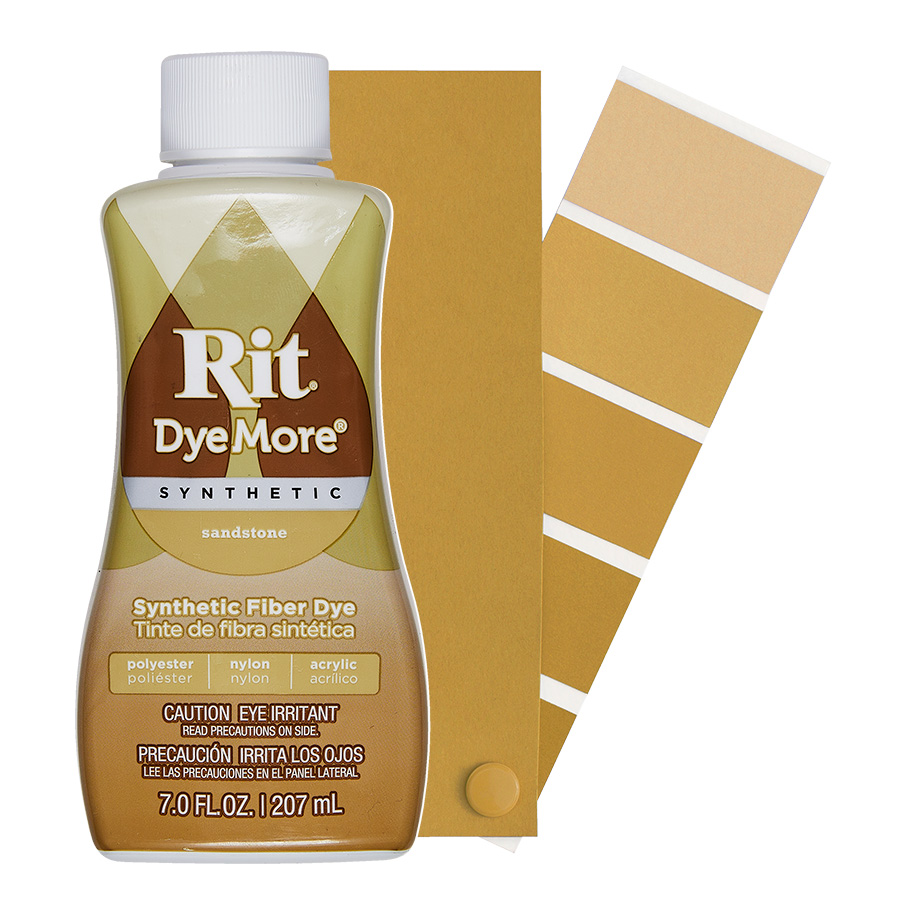
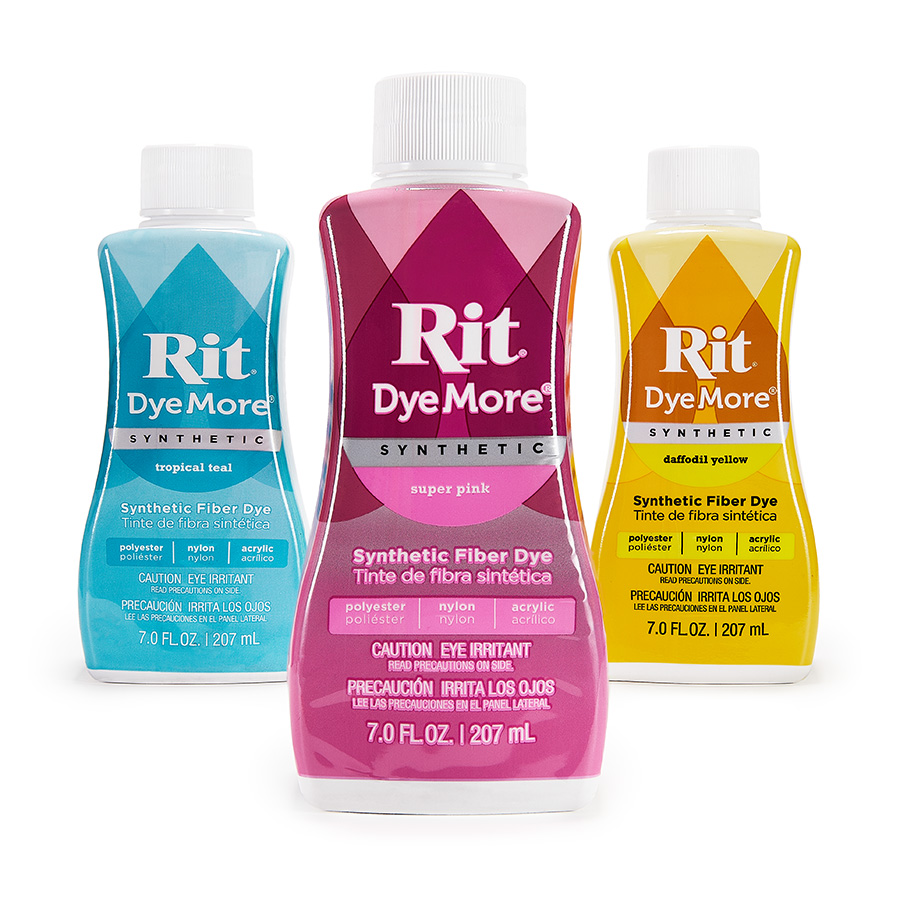
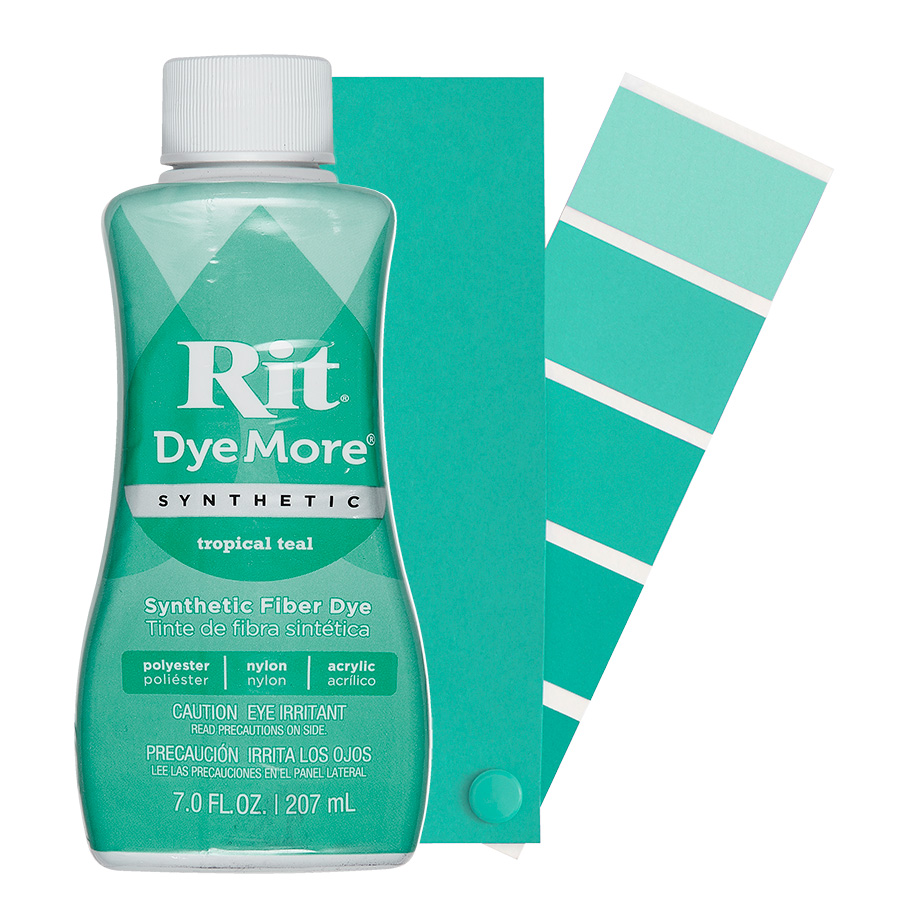
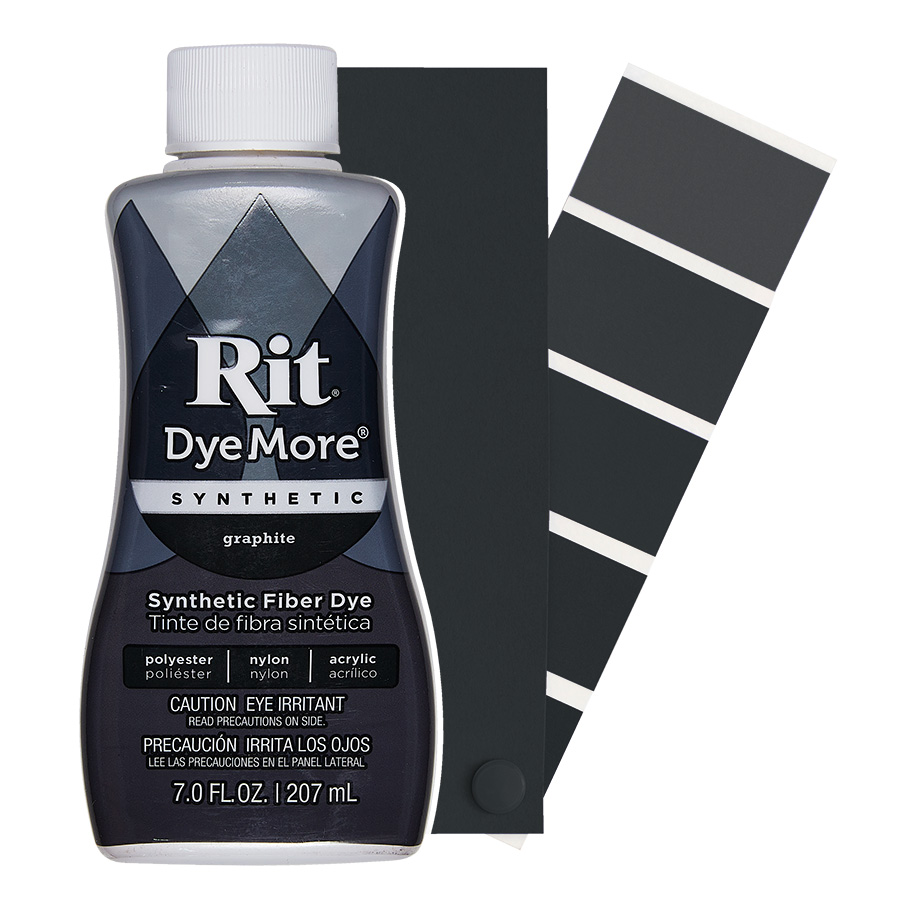
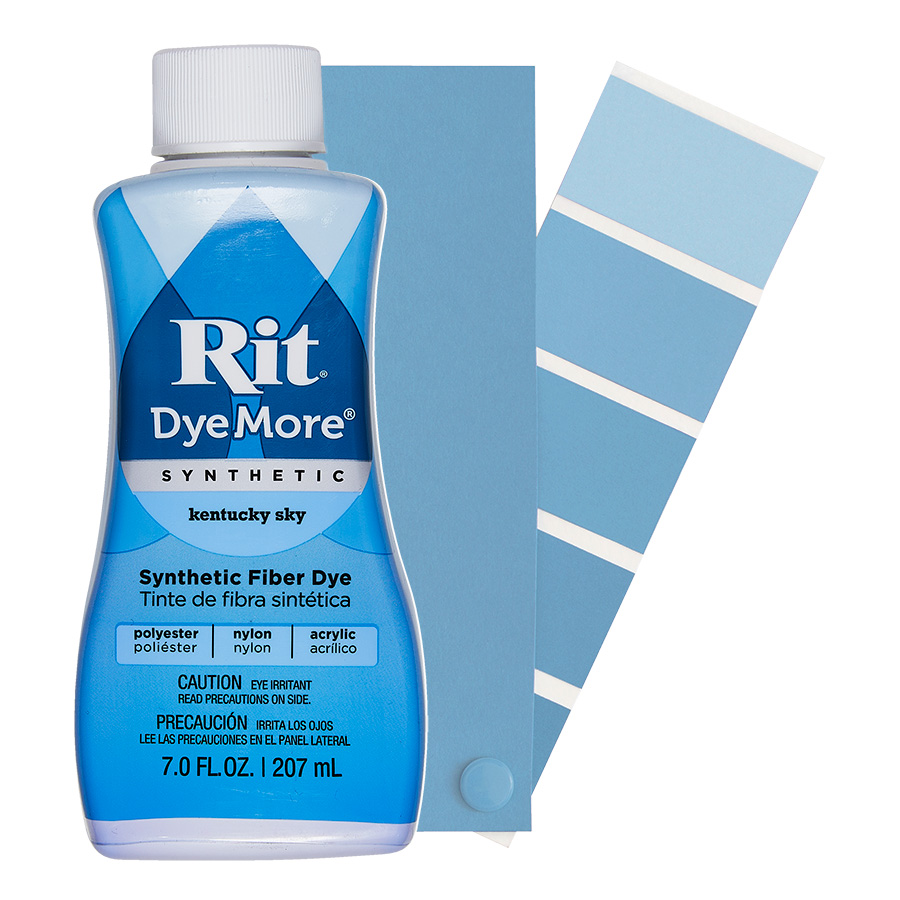
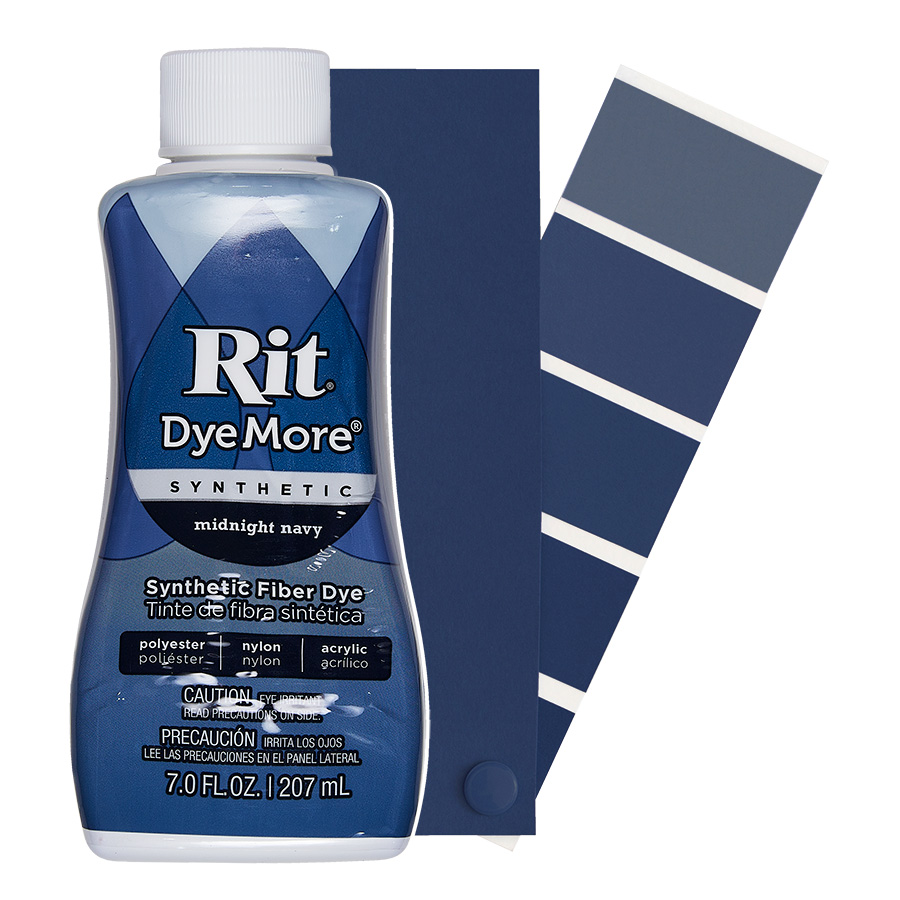
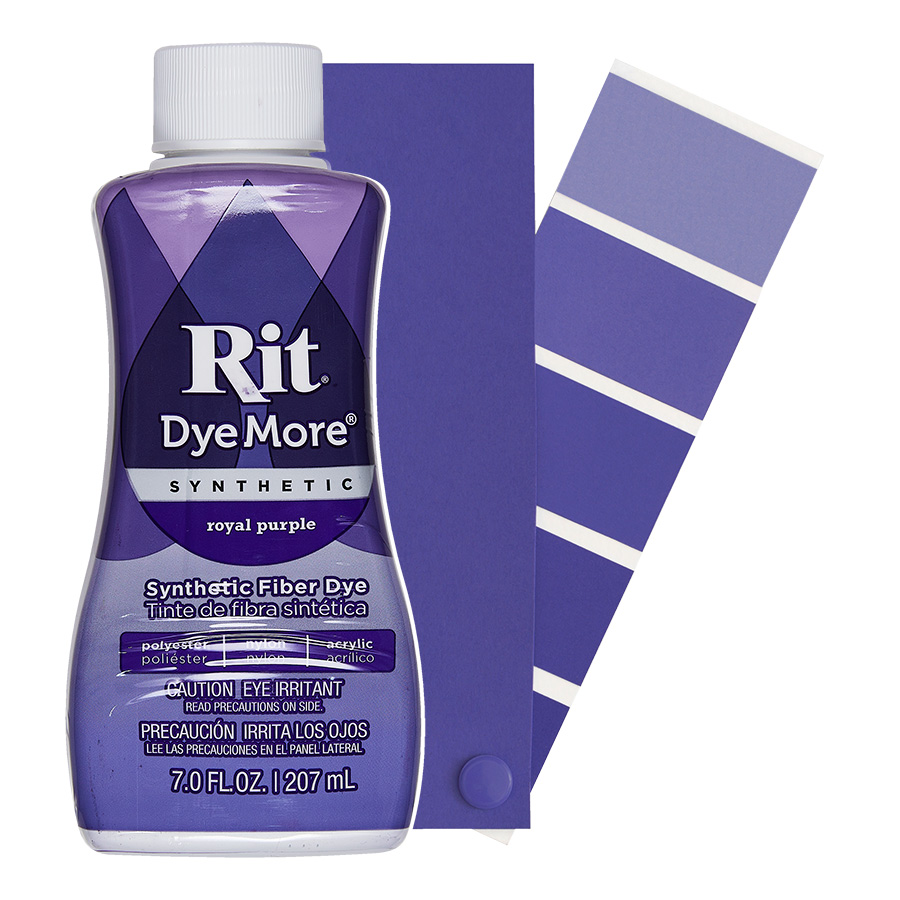
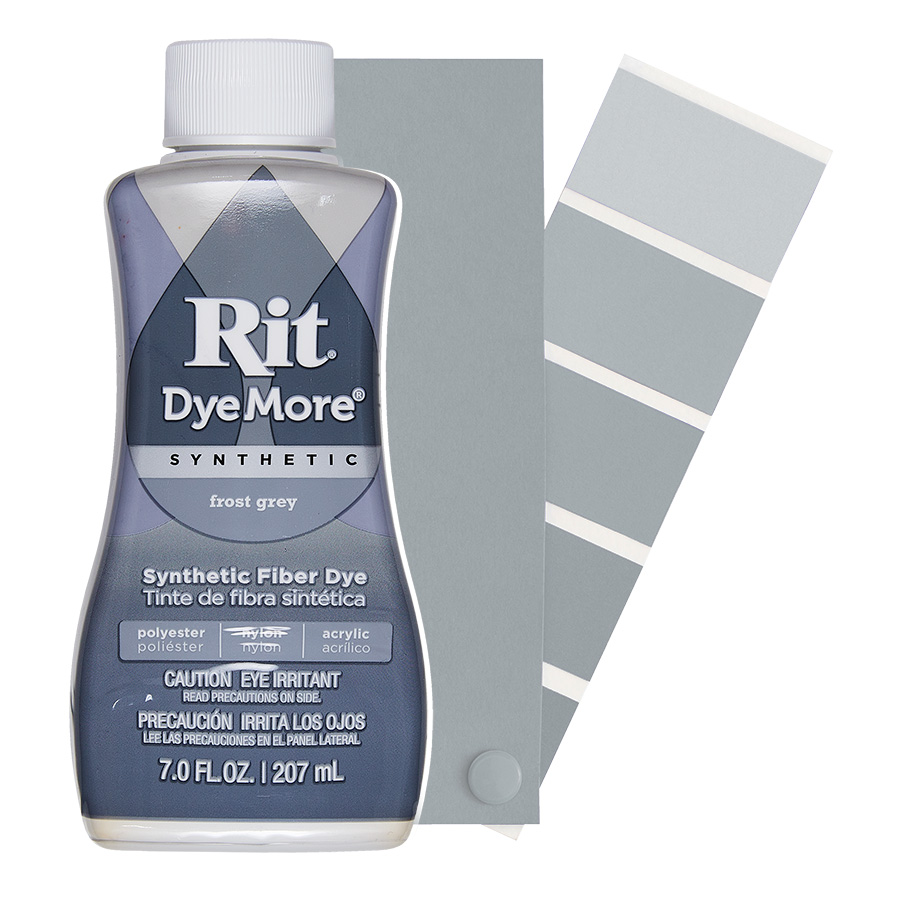
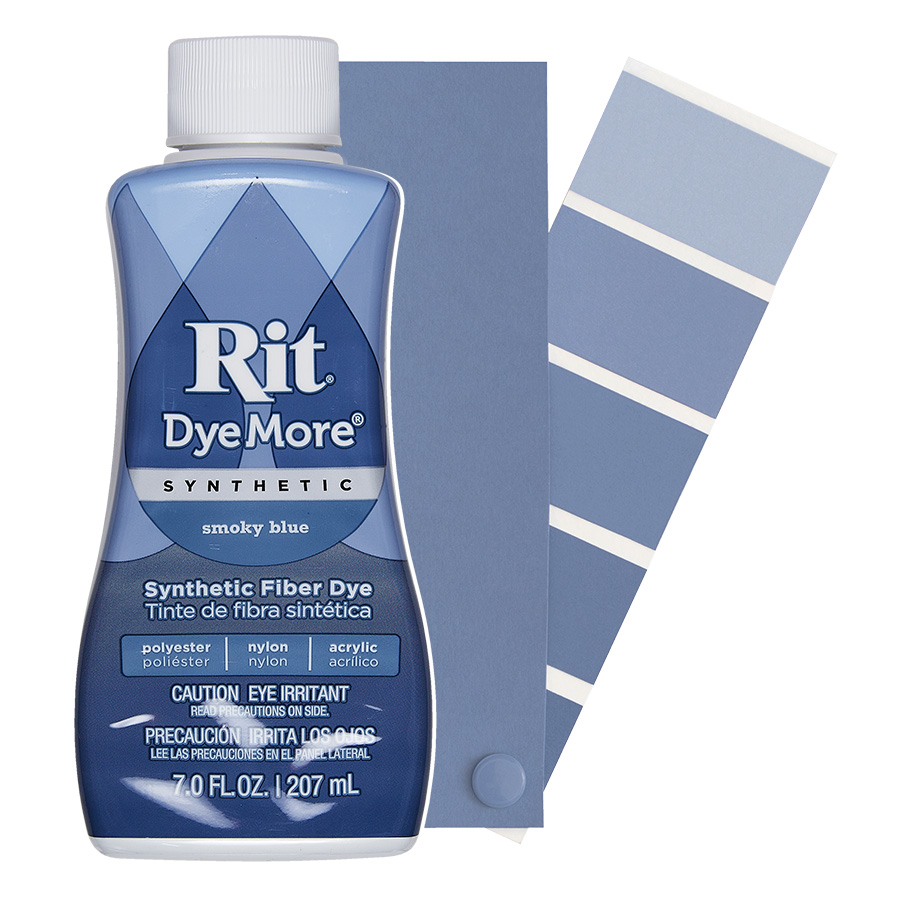
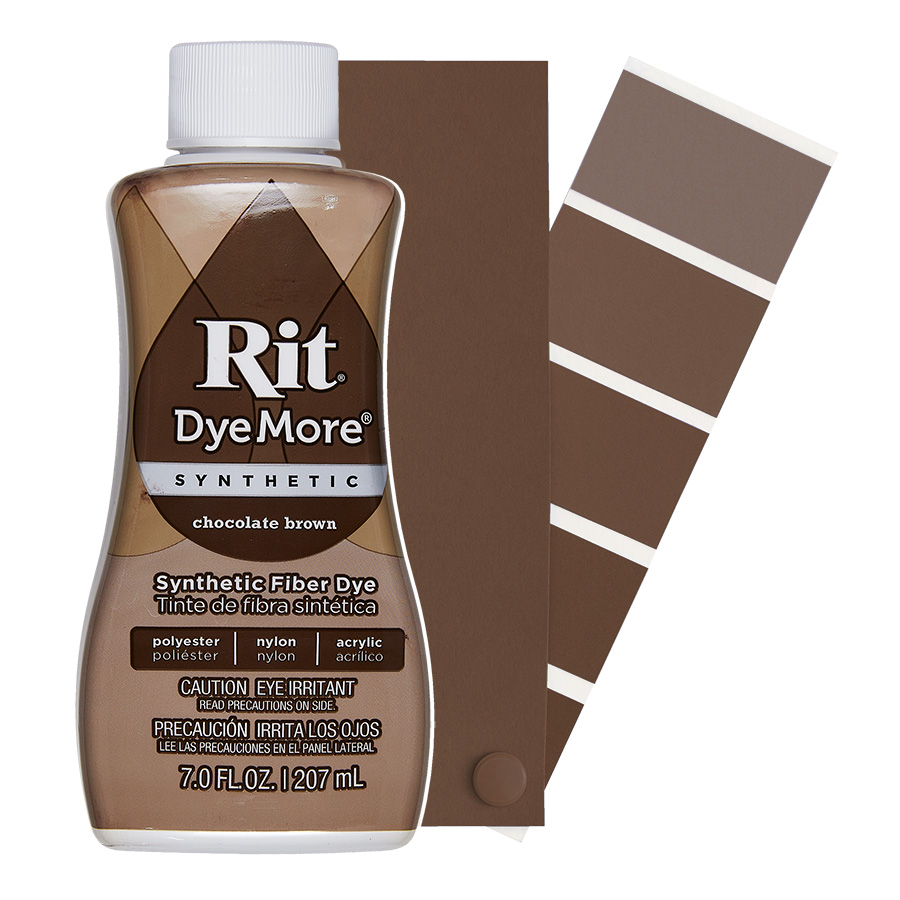
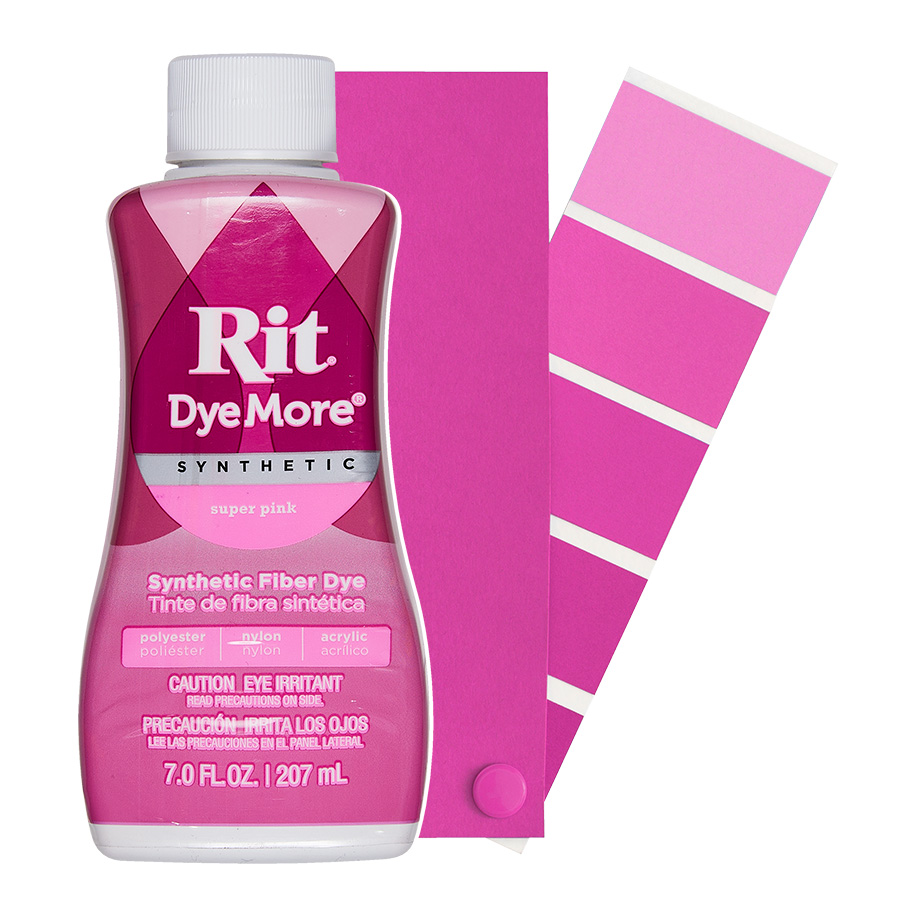
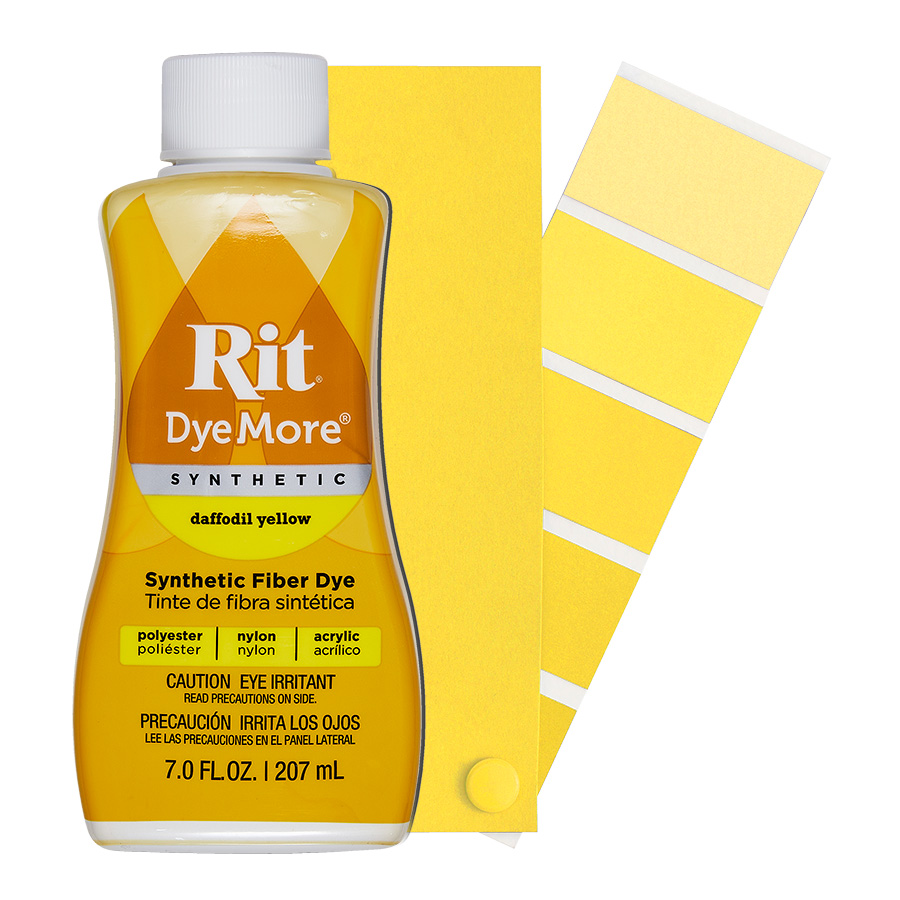
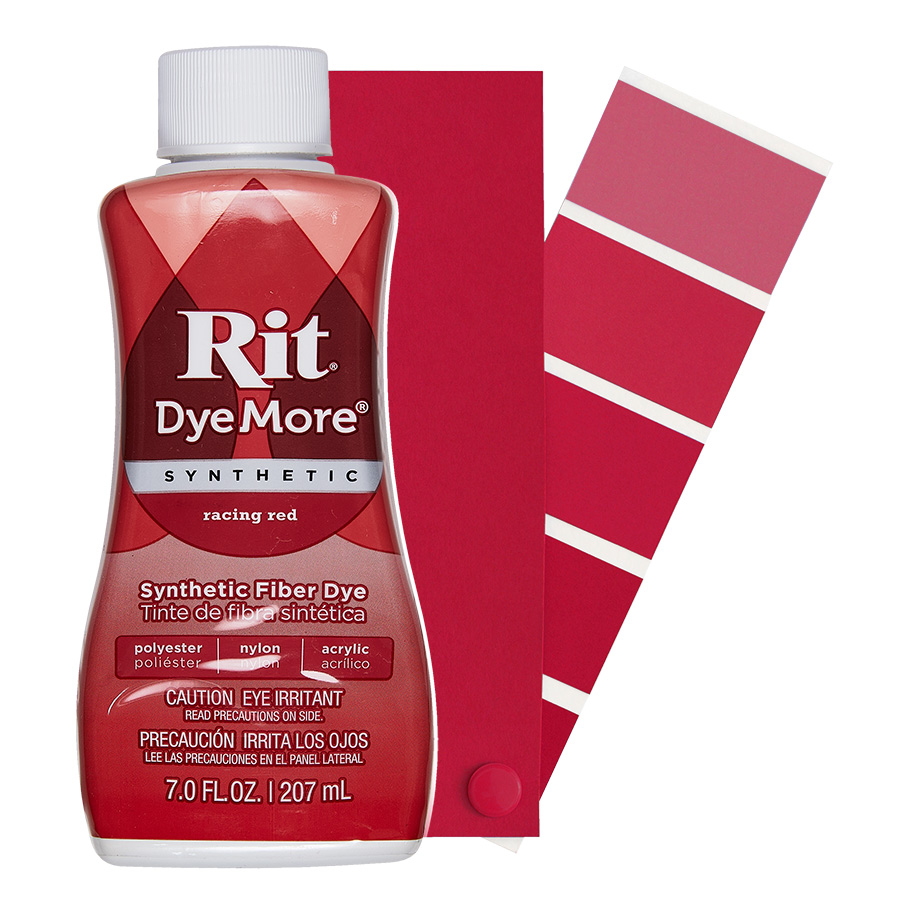
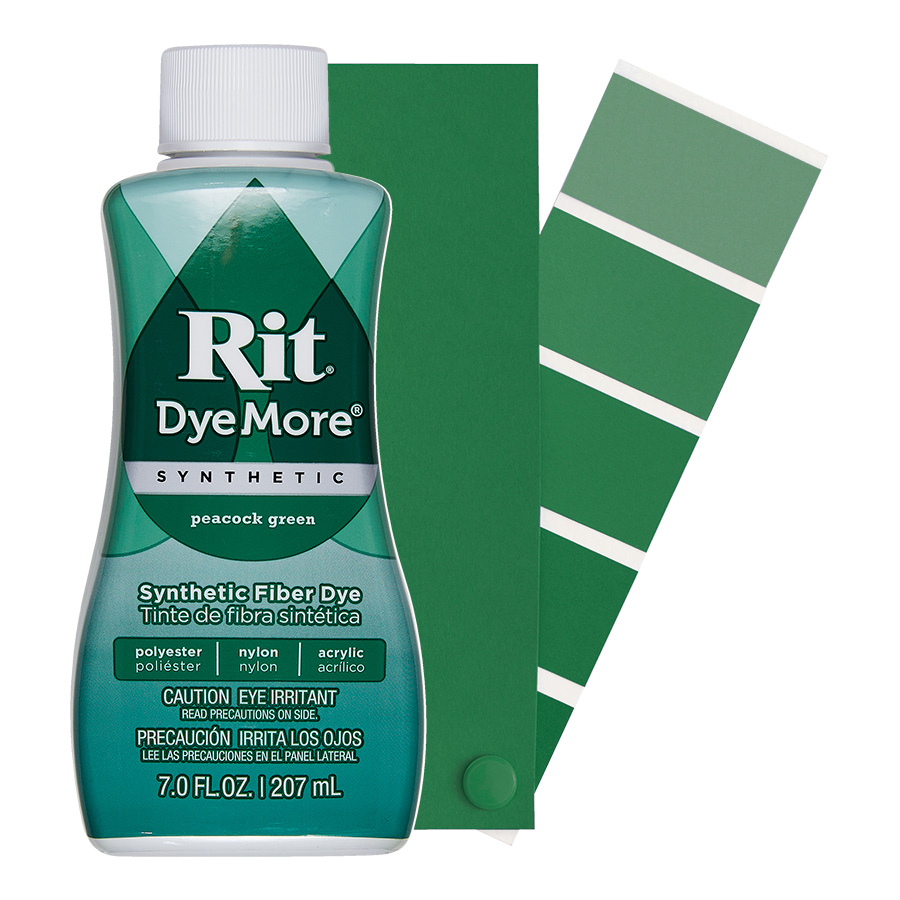
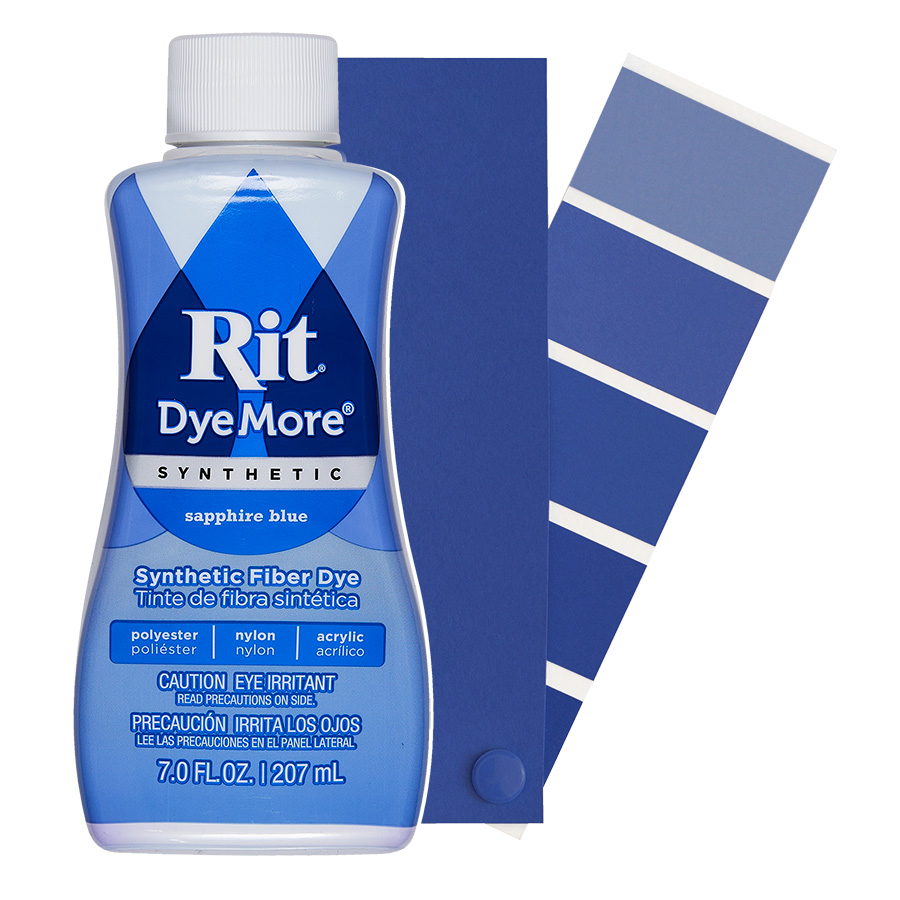
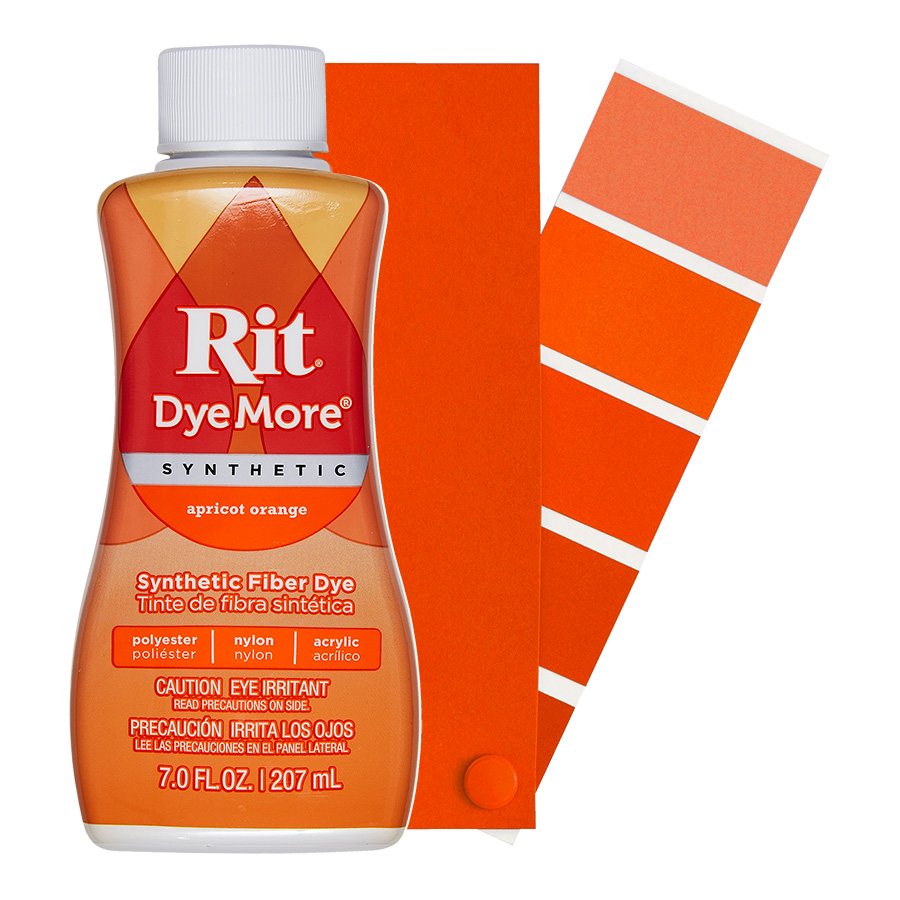
Rit DyeMore - Polyester & Synthetics Textile Dye | Sandstone
Available, delivery time: 1-3 days
Rit DyeMore: dye polyester and synthetic fibres yourself, the easy way
Synthetic fibres are very hard to dye with normal fabric dye.
That is why Rit® developed the liquid fabric dye DyeMore. It dyes polyester, polyamide (nylon), acrylic, acetate and blends with synthetic content.
You do not need to dissolve any powder or mix anything.
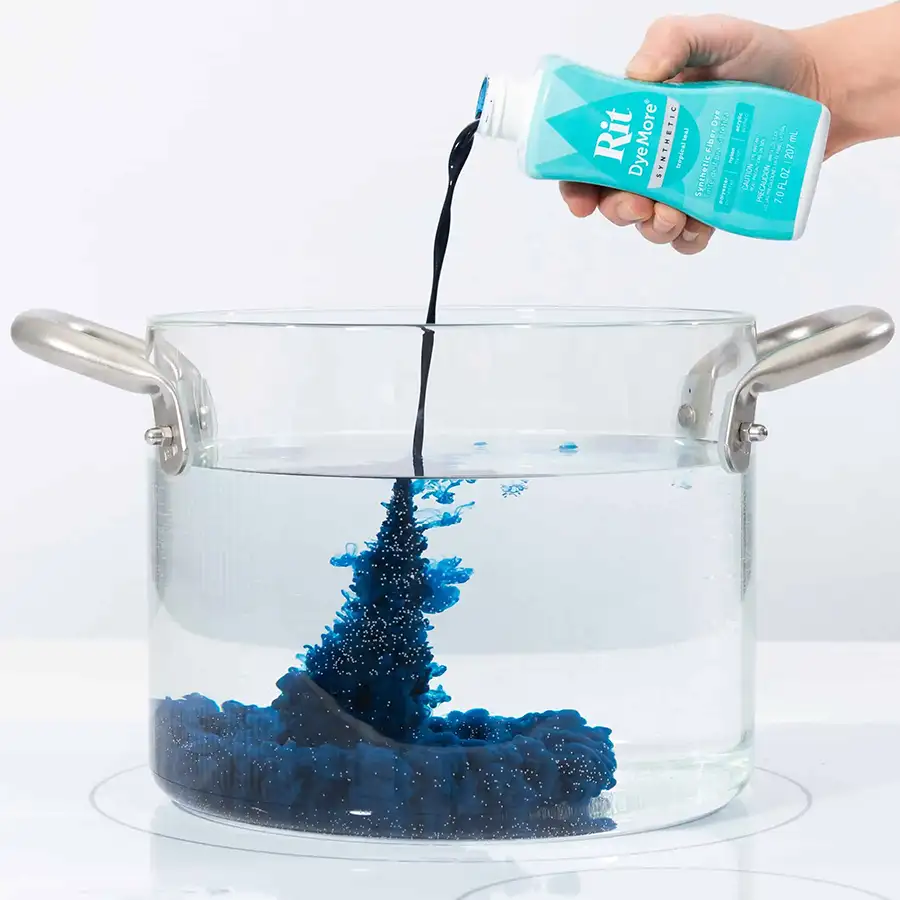
The dye comes ready to use in the bottle. You dye in a cooking pot or on the stove.

At a glance
• Liquid fabric dye for synthetic fibres, 207 ml per bottle
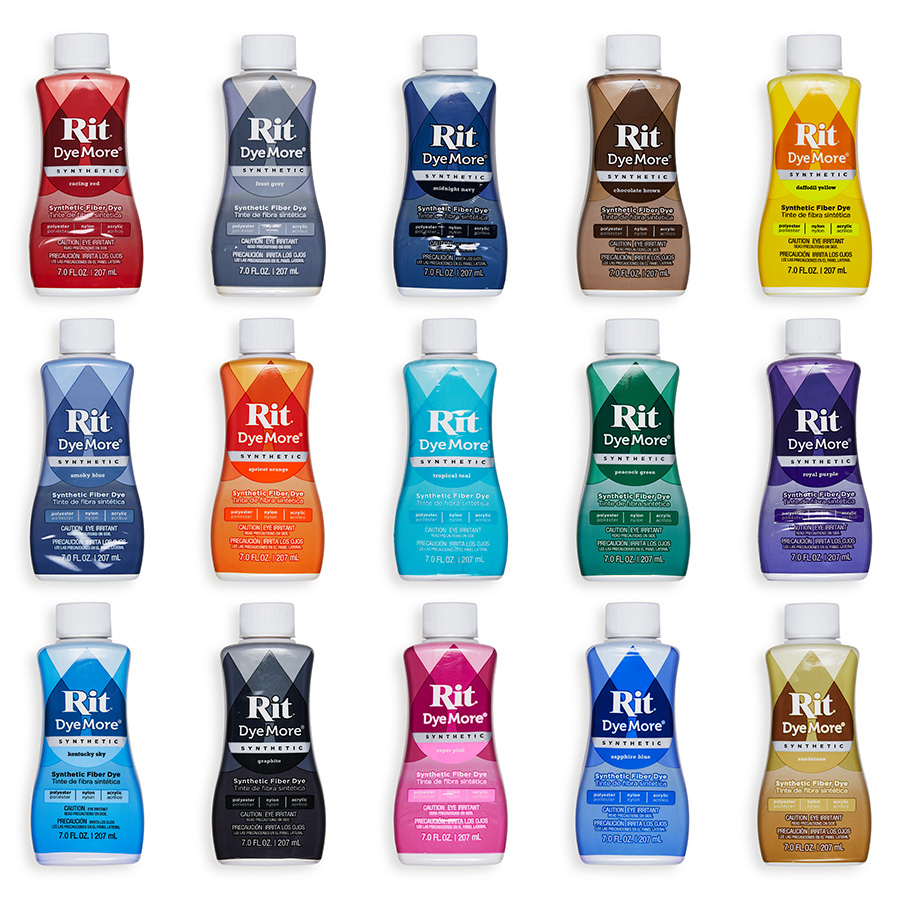
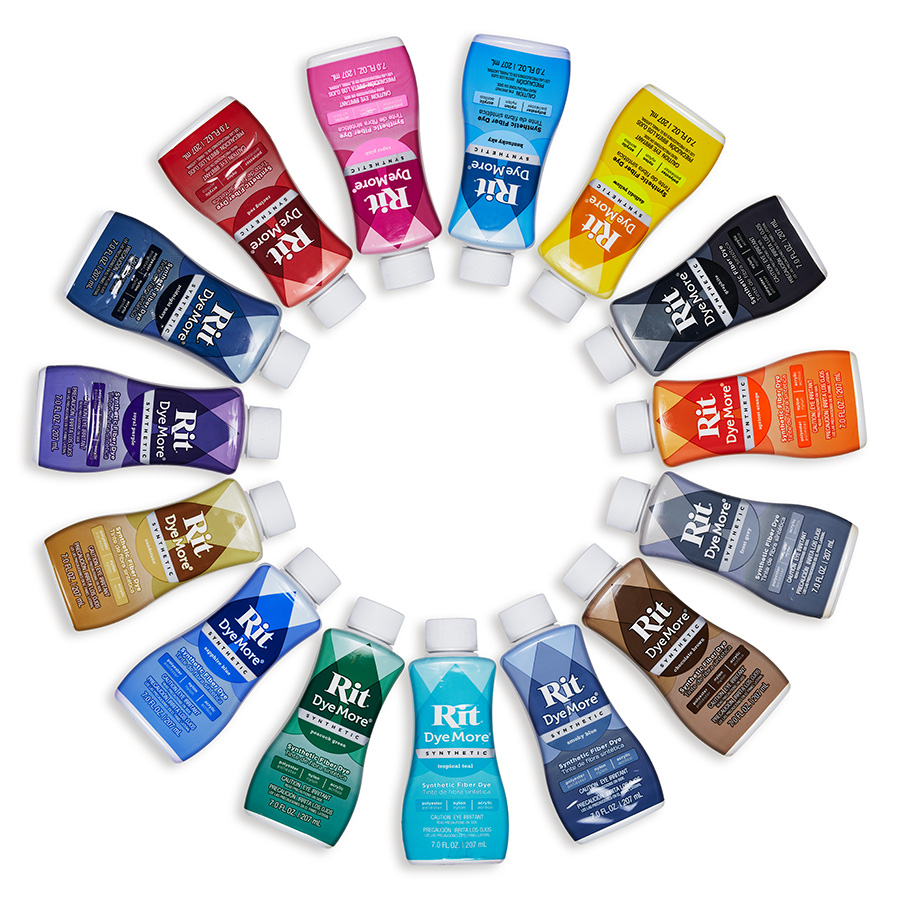
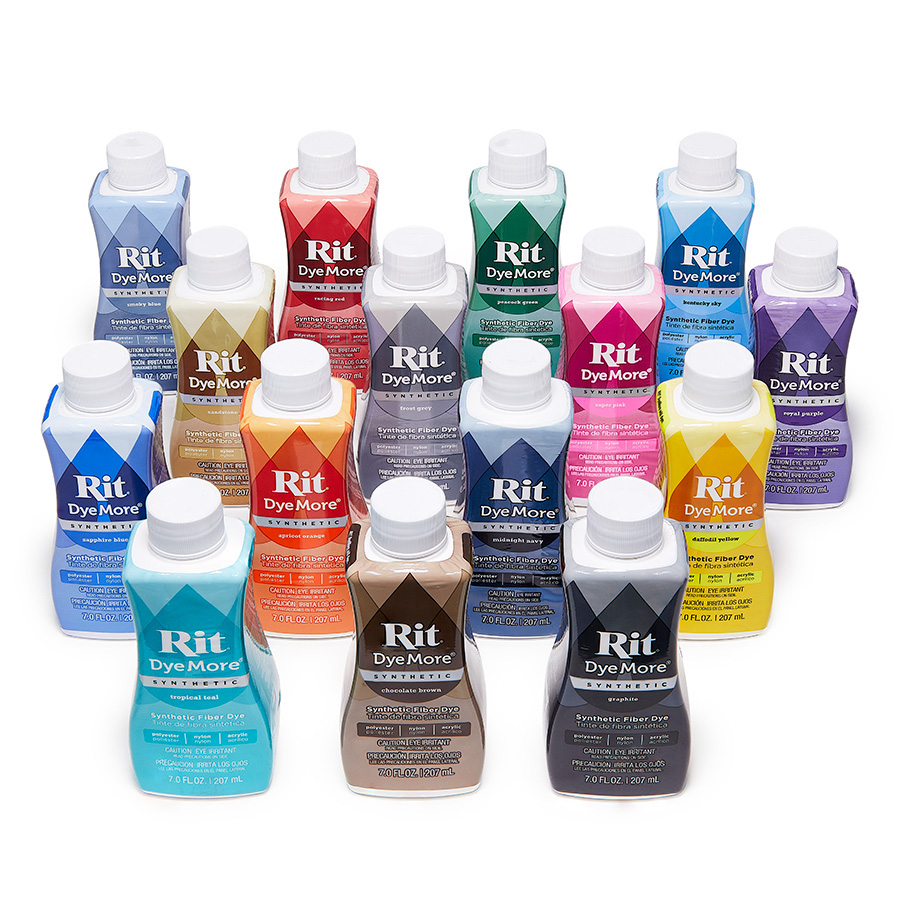
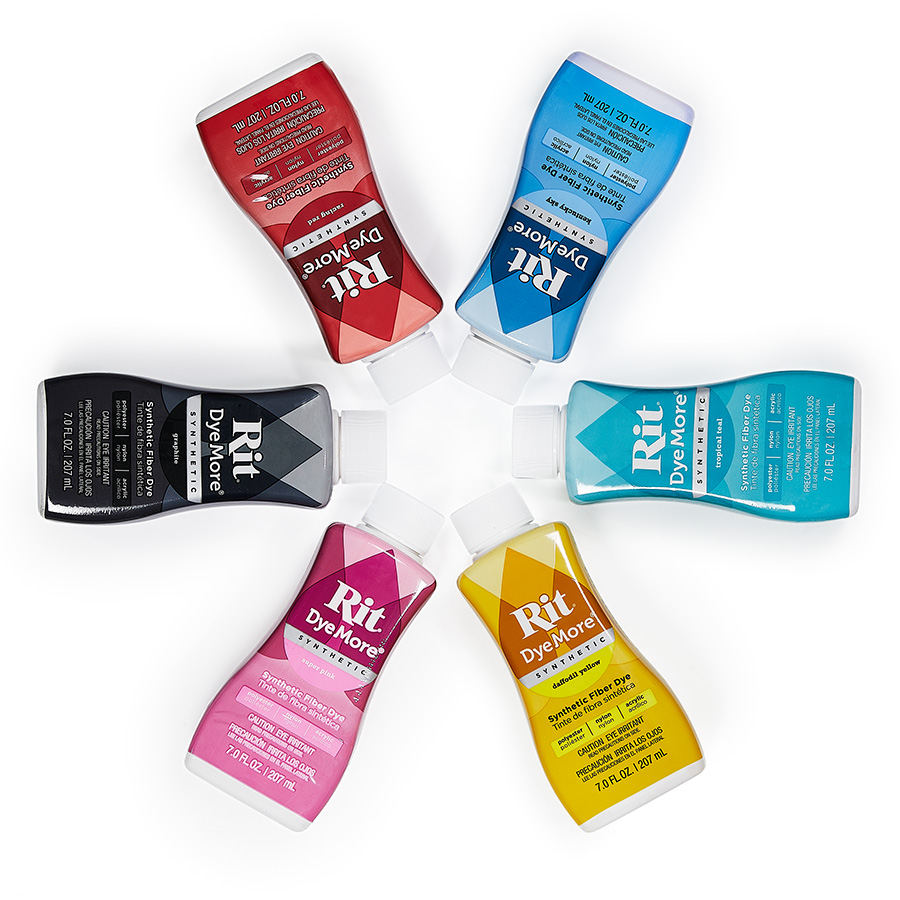
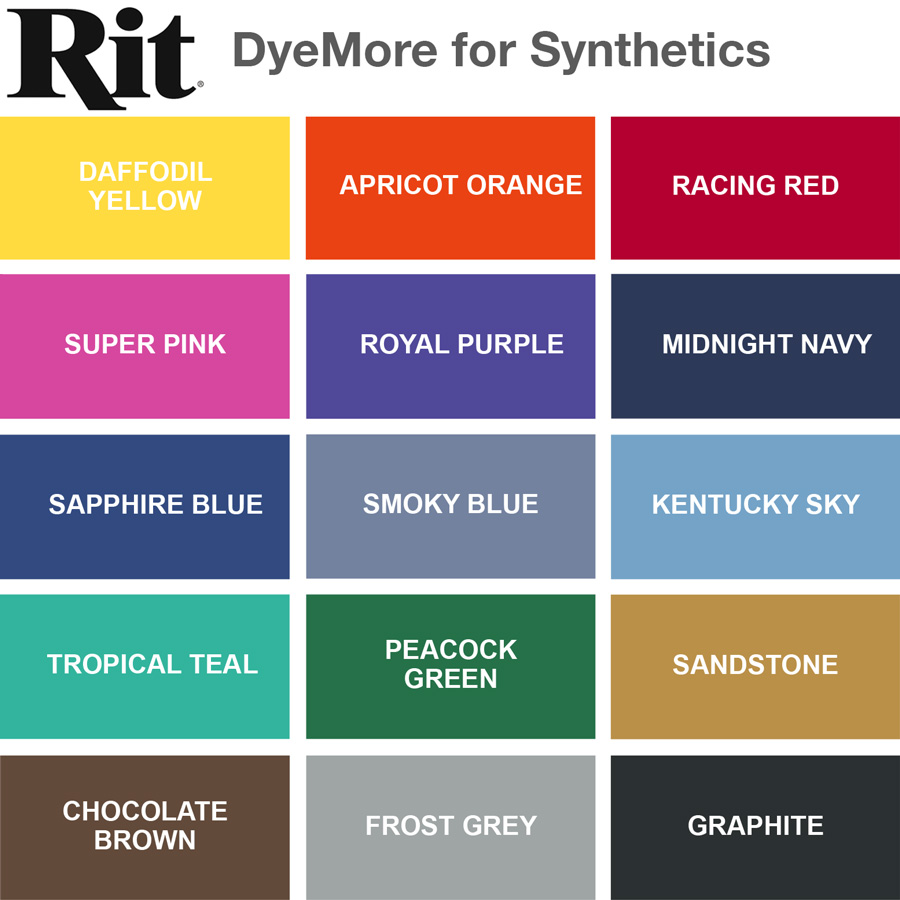
• 16 colours that can be mixed with each other
• Dyes polyester, polyamide (nylon), acrylic, acetate and blends with at least 35 % synthetic fibre
• Dyeing in a pot on the stove, at 80 to 93 °C depending on the fibre
• Wash fast and light fast
Which fabrics is Rit DyeMore suitable for?
• Polyester: needs at least 93 °C. The water must be kept just below boiling.
• Polyamide (nylon): dyes from about 80 °C. Nylon takes up the dye very quickly and strongly. So keep the dyeing time short.
• Acrylic and acetate: dye well, but can become soft at high temperatures. Please always dye a test piece first.
• Blends: for example polyester with cotton, if they contain at least 35 % synthetic fibre.
What is Rit DyeMore not suitable for?
• Pure natural fibres such as cotton, linen, silk or wool. For these, use Rit All-Purpose Dye.
• Blends with less than 35 % synthetic fibre. Here too, Rit All-Purpose Dye is the better choice.
• Coated or water-repellent fabrics, for example rain jackets, backpacks, sunshades, garden furniture covers and many curtains. The coating does not let the dye into the fibre.
• Down. It sticks together in hot water.
• Faux leather, rubber and vinyl prints. They can come loose in the heat. It is best to remove prints beforehand with the AlbaChem VLR label remover.
Typical uses
Whether trousers or curtains: with Rit DyeMore you can dye polyester costumes and uniforms, linings, blouses, dresses, trousers made of blends, nylon jackets, uncoated curtains and tablecloths.
Tip for professionals: For series and important costume pieces, always dye a test piece first. Remember: you can only dye what fits into your pot and can move freely in it.
How much dye do I need?
Weigh the dry item on a kitchen scale or estimate its weight. Then use these guide values:
• Pastel (soft shade): 1 bottle is enough for up to approx. 1 kg of fabric.
• Strong shade or 100 % polyester: 1 bottle for approx. 450 g of fabric, so double the amount.
• Dark shades (Graphite, Midnight Navy, Chocolate Brown): at least 2 bottles, about 2 bottles per 450 g of fabric.
| Item | Approx. weight | Pastel | Strong or 100 % polyester | Dark |
|---|---|---|---|---|
| Blouse, top | 150 g | 1 bottle | 1 bottle | 2 bottles |
| T-shirt | 200 g | 1 bottle | 1 bottle | 2 bottles |
| Dress | 400 g | 1 bottle | 1 bottle | 2 bottles |
| Trousers | 500 g | 1 bottle | 2 bottles | 3 bottles |
| 1 m of light fabric | 170 g | 1 bottle | 1 bottle | 2 bottles |
| 1 kg of fabric | 1000 g | 1 bottle | 3 bottles | 5 bottles |
Fibre content and weight affect the result. Leftover dye keeps well in the closed bottle and can be used next time.
I want to dye polyester black. Why is there no black?
We asked ourselves the same question. Rit's answer was surprising: a 100 % black is not possible on polyester. Rit does not want to raise false hopes. That is why the darkest shade is called "Graphite".
Graphite is a very pure, dark anthracite and comes very close to black. If you want black, simply choose Graphite. You will like it!
The care label says my garment may only be washed at 30 °C. Can I still dye it?
Usually yes. Polyester and polyamide cope well with the high dyeing temperature. Care labels are often very cautious.
Shrinking is caused more by high spin speeds and the tumble dryer than by hot water.
Take care with:
• Elastane (stretch content): the fabric can lose its elasticity.
• Acetate and acrylic: they can lose their shape.
• Elastic bands, bonded seams, coatings and faux leather: they can come loose.
If in doubt, first dye a piece in a hidden place, for example the hem allowance.
Why not dye in the washing machine?
There are two reasons:
• Hardly any washing machine reaches the necessary 93 °C. The colour then turns out pale and pastel.
• Rit DyeMore also dyes plastics. The seals and detergent drawer of your washing machine can be stained permanently.
If you still dye in the machine, clean all plastic parts thoroughly right after dyeing.
Problems dyeing polyester?
• The colour is very weak or missing: the fabric is probably coated or water-repellent. Unfortunately, you often only notice this after dyeing.
• The colour is too pale: usually the temperature was too low or too little dye was used. Weigh the dry fabric and follow the quantity table above.
• Patches and badges made of vinyl, rubber or other plastics can be damaged. Please remove them first.
• Down garments should never be dyed with Rit DyeMore. The down sticks together.
Rit DyeMore or iDye Poly?
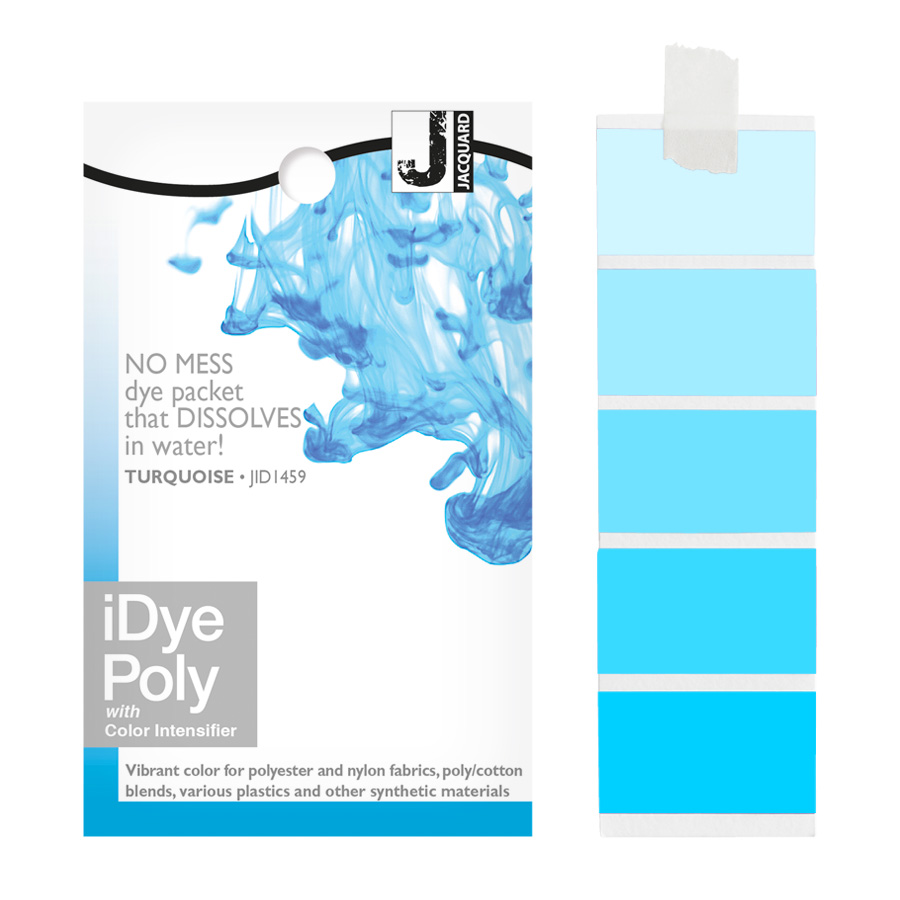
Both dyes colour polyester intensely. Rit DyeMore is liquid and ready to use. It also dyes nylon, acrylic and acetate and comes in 16 colours.
iDye Poly is a powder in 24 colours. One sachet dyes up to 1.3 kg of fabric. iDye Poly is also available in a 450 g professional tin and it does not stain plastic parts.
How long does the colour last?
Dyeings on synthetic fibres are wash fast and light fast. Like any dyeing, they can fade a little over time with strong sunlight or very frequent washing.
Our recommendation
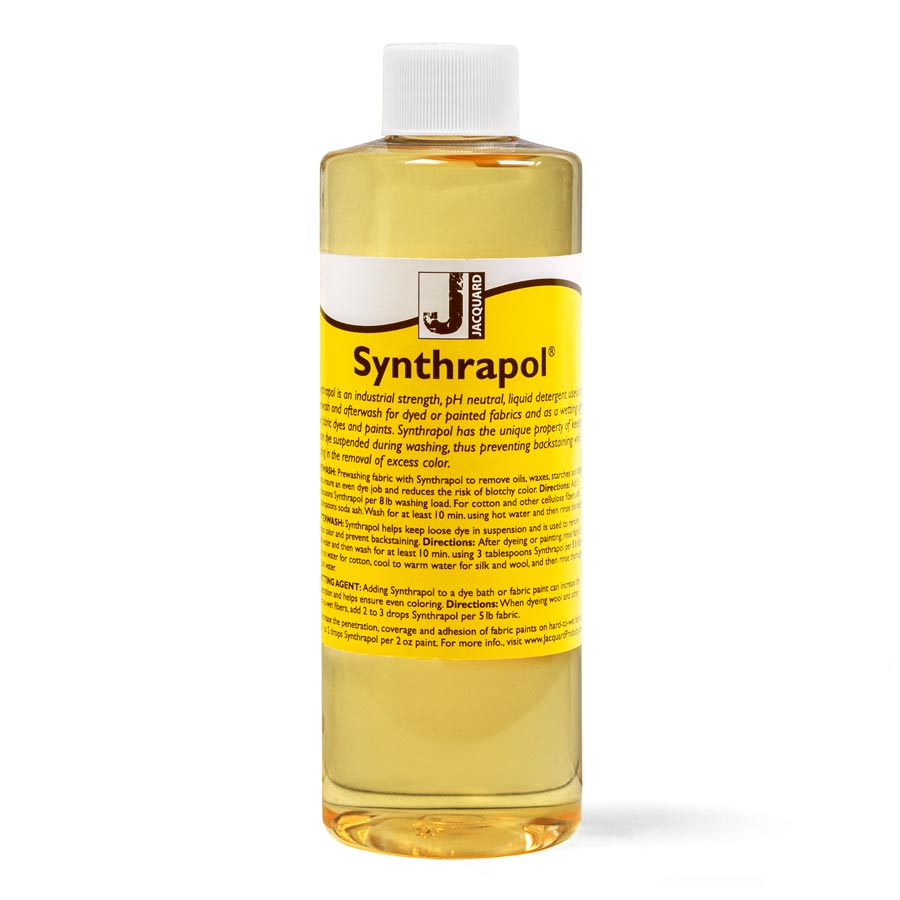
• Add 1 teaspoon of Synthrapol or washing-up liquid to the dye bath. This helps the colour to take evenly.
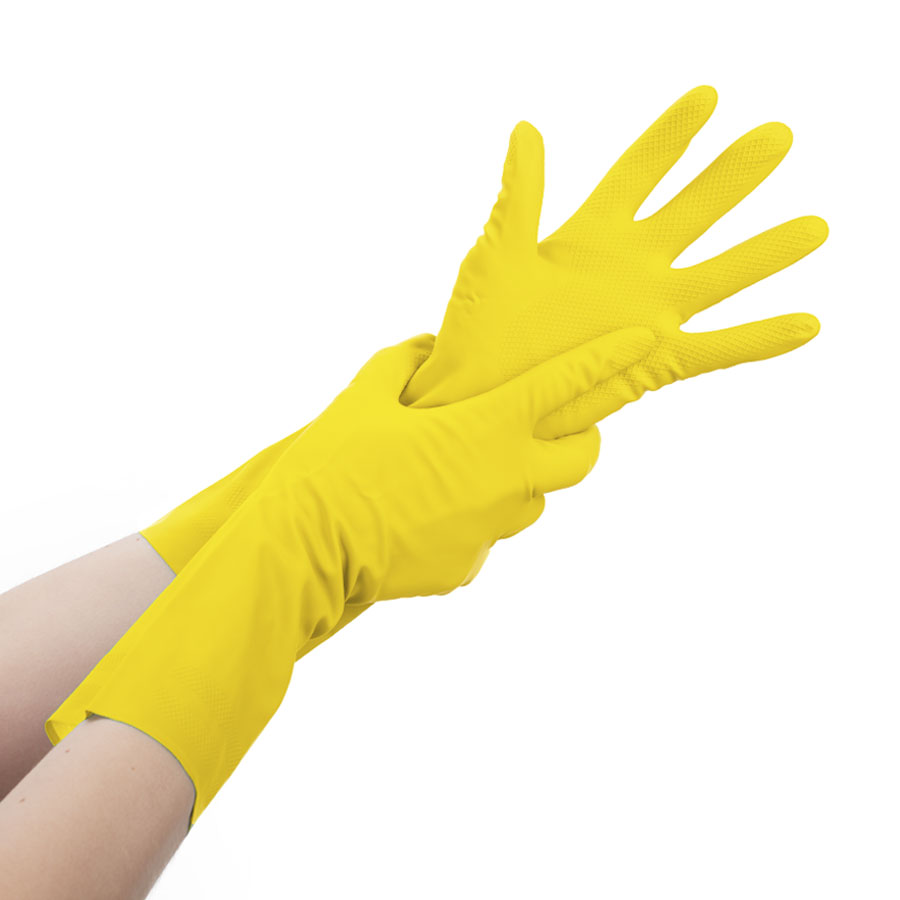
• Always wear rubber gloves when dyeing. They protect your skin from dye and heat.
Contents
• 207 ml liquid fabric dye
You will find detailed dyeing instructions in the "Instructions" tab or here: Rit DyeMore instructions
Safety information

For all colours: avoid contact with skin and eyes. Wear gloves and eye protection. Make sure the room is well ventilated. Do not eat, drink or smoke. Wash your hands after work. Keep out of the reach of children.
Warning. May cause an allergic skin reaction. According to the manufacturer's safety data sheet, this applies to the colours Apricot Orange, Daffodil Yellow, Chocolate Brown, Royal Purple, Smoky Blue, Tropical Teal, Midnight Navy, Peacock Green, Sapphire Blue, Graphite and Plum Berry.
Avoid breathing vapours or mist. Wear protective gloves, protective clothing and eye protection. If on skin: wash with plenty of soap and water. Take off contaminated clothing and wash it before reuse. If skin irritation or rash occurs: get medical advice. Dispose of contents and container in accordance with local regulations.
Sales unit: 1 piece
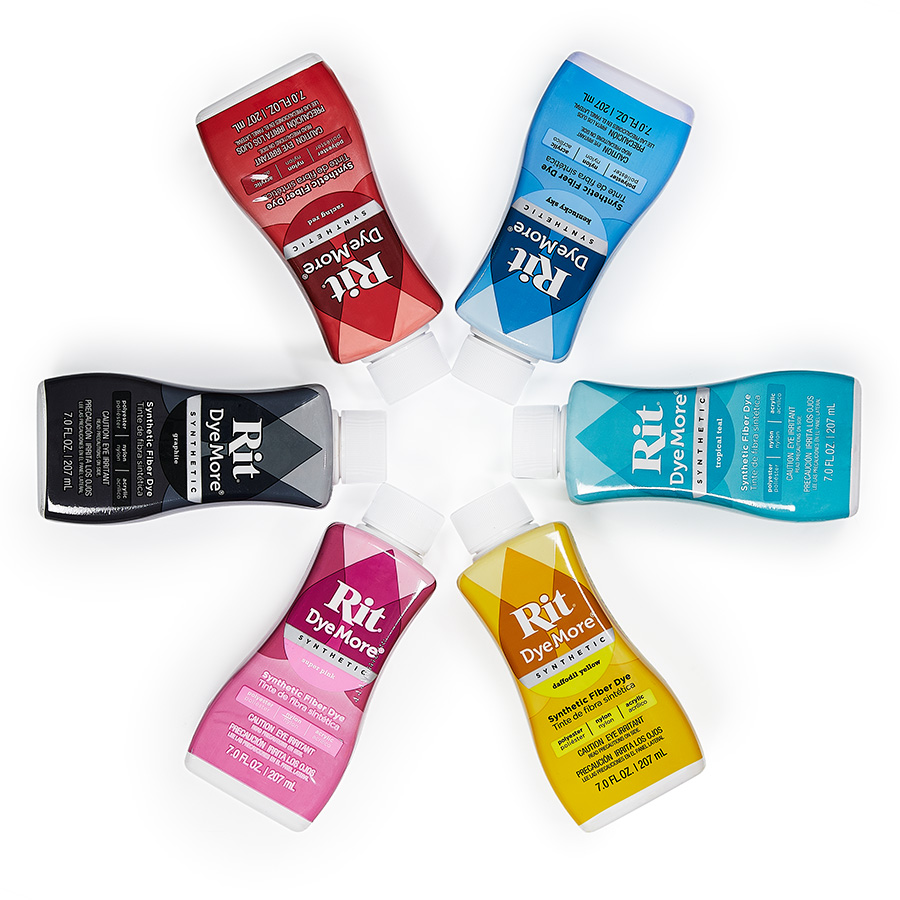
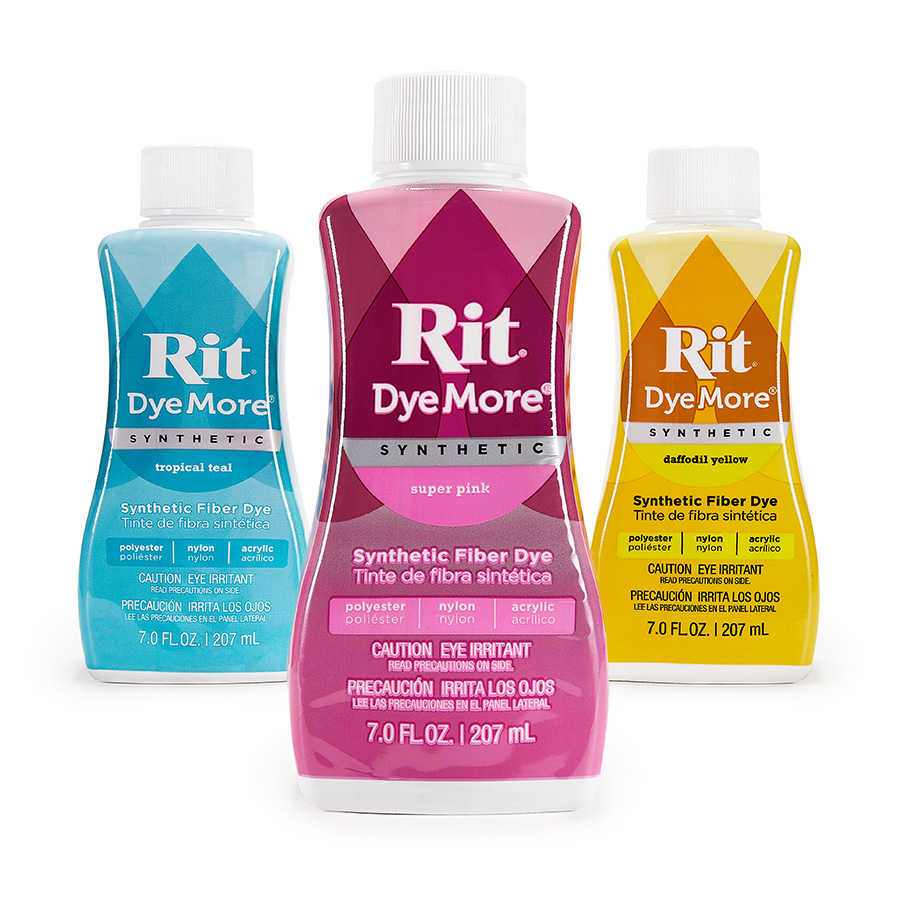
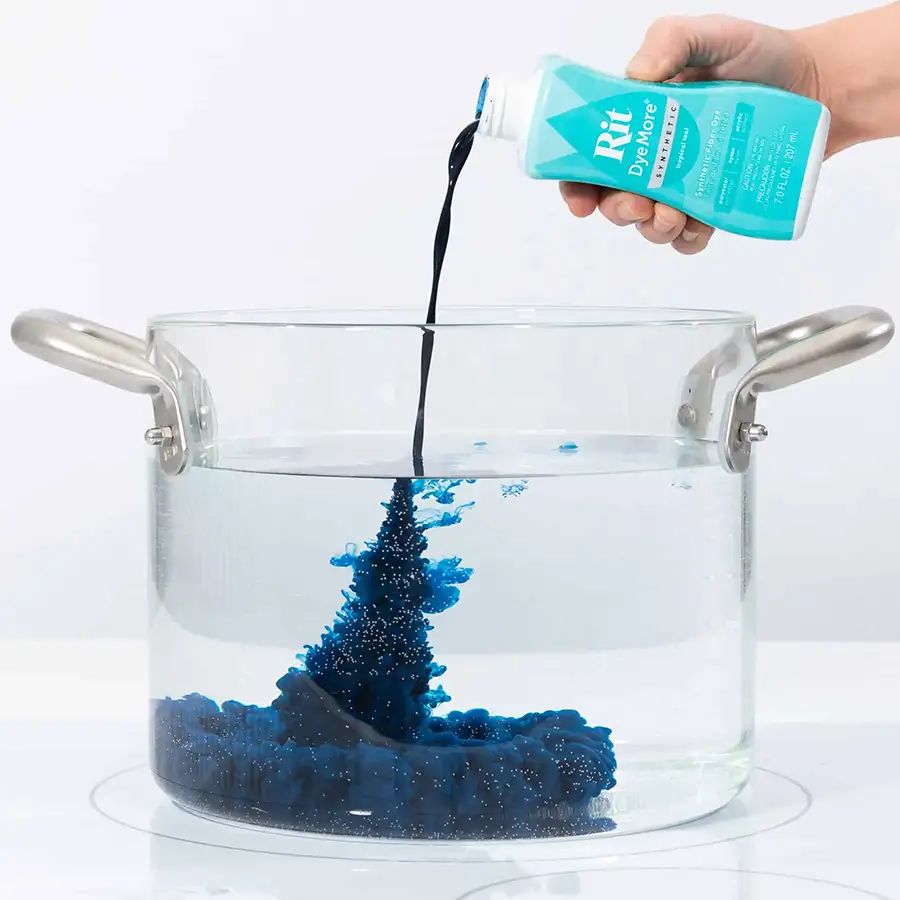
Rit DyeMore: Dyeing instructions
Important: you dye on the stove
Synthetic fibres need very hot water. The temperature must be kept up during the whole dyeing process. This means:
• You can only dye what fits into a pot on your stove.
• The washing machine is not suitable. It does not get hot enough, and Rit DyeMore stains its plastic parts.
The right temperature
• Polyester: at least 93 °C, just below boiling point
• Polyamide (nylon): from approx. 80 °C
• Acrylic and acetate: test on a sample piece first, as these fibres can become soft at high heat
Which colour can I achieve?
If your garment is white or off-white, you will get the true shade. If it already has a colour, you can only overdye it darker. Colour removers such as Rit Color Remover usually do not work on synthetic fibres.
Patterns and logos: the new dye mixes with the existing colours. This creates new shades. You will find more about this in the "FAQ" tab.
Bleach stains and sun damage: sun and bleach damage the fabric. We therefore cannot guarantee that such stains will disappear after dyeing.

Preparation
1. Weigh the dry item to work out the amount of dye. You will find the quantity table in the description.
2. Remove visible stains. This is the only way to get an even result.
3. Prewash the item in warm soapy water without fabric softener, or use Synthrapol. This removes finishes that stop the dye from taking.
4. Cover the area around the stove with plastic sheeting or newspaper. Keep kitchen paper ready.
5. Wear rubber gloves and eye protection. Remember: the water is very hot!
How to dye
1. Fill a stainless steel pot with enough water for the fabric to move freely. Allow about 25 litres of water per kilogram of fabric.
2. Add 1 teaspoon (5 ml) of washing-up liquid or Synthrapol to the water. This helps the colour to take evenly.
3. Cover the pot and heat the water to the right temperature (see above).
4. Shake the bottle well. Add the dye to the hot water and stir well.
5. Wet the fabric and place it in the dye bath. Never dye dry fabric!
6. Keep the temperature up during the whole dyeing process.
7. Stir slowly and constantly. The first 10 minutes are the most important. Stirring makes the colour even and free of spots.
8. Leave the fabric in the dye bath for 10 to 60 minutes. Polyester and polyester cotton blends need at least 30 minutes for the dye to be fully absorbed. Nylon dyes very quickly and darkly and therefore needs less time.
9. When you have reached the shade you want, take the fabric out. Wet fabric looks darker than dry fabric. Squeeze out the excess dye.
10. For blends with cotton, linen or viscose, you can now use a dye fixative such as Rit ColorStay Dye Fixative, before washing. It intensifies the colour and reduces bleeding.
11. Rinse the fabric in warm water. Let the rinse water gradually become cooler until it runs clear.
12. Wash the fabric in warm water with a mild detergent. Then rinse and dry.
Good luck!
Rit Dye: Frequently asked questions and troubleshooting
These questions apply to Rit All-Purpose Dye and Rit DyeMore. Where the two dyes differ, this is stated.
Which Rit dye for which fabric?
• Rit All-Purpose Dye: for cotton, linen, silk, wool, viscose (rayon), ramie and nylon
• Rit DyeMore: for polyester, nylon, acrylic, acetate and blends with at least 35 % synthetic fibre
• Rit ProLine: professional powder for almost all fibres, including polyester, acrylic and acetate as well as mixed costumes made of natural and synthetic fibres
Questions about colours
Can I dye coloured or printed fabrics?
Yes. This is called overdyeing. If the fabric is light and plain, you can simply dye it darker. With patterns and logos, the new dye mixes with the existing colours. An example: pink flowers on a white background turn purple with blue dye, and the rest turns blue. Even with a dark dye, the pattern can show through a little lighter.
Can I change the colour completely, for example from purple to blue?
With natural fibres, yes: first remove the colour, then dye the fabric again. With synthetic fibres, removing the colour usually does not work. Here you can only overdye darker.
Why should I add a second dye when overdyeing with black or Graphite?
The dyes are made for white or light fabrics. On a coloured fabric, the old colour can show through. A counter colour helps. An example: if you dye a red fabric black, add some green. Red and green together make almost black.
Can I dye a black garment white?
There is no white dye. With natural fibres, however, you can remove the colour with a colour remover. The fabric then turns white or cream. With synthetic fibres, the colour unfortunately cannot be removed.
How do I get rich, dark colours such as black or navy?
The three most important points: dye on the stove. Double the amount of dye. And with natural fibres, use a dye fixative after dyeing.
Are there mixing recipes for more shades?
Yes. Rit offers hundreds of mixing recipes. You will find them in the "Interactive colour chart" tab.
Questions about dyeing
How much dye do I need?
This depends on the weight of the dry fabric. Weigh it on a kitchen scale. For large items such as bed linen or curtains, stand on the bathroom scale with the item and subtract your own weight.
• Rit All-Purpose Dye: half a bottle (approx. 120 ml) or one packet of powder dyes approx. 450 g of fabric. That is about two large T-shirts. For dark colours, use double the amount.
• Rit DyeMore: see the quantity table in the product description.
What temperature does the dye bath need?
Rit loves hot water. The heat opens up the fibres so that they take up the dye.
• Rit All-Purpose Dye for natural fibres: 60 to 71 °C. If your tap water is not hot enough, heat water on the stove.
• Rit DyeMore for synthetic fibres: nylon from approx. 80 °C, polyester at least 93 °C. For this you must dye on the stove.
How long should the fabric stay in the dye bath?
For the shade on the bottle: 30 to 60 minutes, stirring constantly. For lighter shades: 10 to 20 minutes. Polyester and polyester blends need at least 30 minutes, even if the shade is reached sooner. Nylon dyes very quickly and darkly. Remember: wet fabric looks darker than dry fabric.
How do I get an even colour?
The dye bath must be large enough for the fabric to move freely. If the fabric is too crowded, you get spots or light and dark areas. Stir constantly.
How can I test the shade first?
Best with a scrap of fabric from the same garment. With Rit All-Purpose Dye, a piece of kitchen paper also works, as it reacts much like cotton. With Rit DyeMore, first heat the dye bath almost to boiling, then leave the fabric scrap in it for 5 minutes. Kitchen paper does not give an accurate result with synthetic fibres.
If the colour is too light, add more dye, ¼ to 1 teaspoon at a time. If it is too dark, add hot water, 1 to 2 cups at a time.
Do I need to wash the fabric before dyeing?
Yes, whether it is new or old. Washing in warm soapy water removes finishes that stop the dye from taking.
There are small dye spots on my fabric. Why?
There are usually three causes: the dye powder was not fully dissolved. The dye was poured directly onto the fabric instead of into the water. Or the fabric was not stirred enough. With natural fibres, you can remove the colour and dye again. With synthetic fibres, you can only overdye with a darker colour.
How do I reduce colour bleeding?
For cotton, linen, silk, wool, ramie or viscose, use a dye fixative right after dyeing, before rinsing. For all other fibres, rinse in warm, then gradually cooler water until the water runs clear.
I dyed in the washing machine and the colour is uneven. Why?
Usually there was too much fabric and too little water in the machine, or the fabric got twisted. Do not dye very large items or many items at once in the machine. Rit DyeMore does not belong in the washing machine at all.
Which salt should I use?
You only need salt with Rit All-Purpose Dye, not with Rit DyeMore. We recommend PATIN-A dyeing salt. Any table salt without iodine also works.
Which pot is best for dyeing on the stove?
A stainless steel or enamel pot is best. Aluminium can be attacked by the salt. Use an old pot for this. It is best to keep dyeing pots separate from cooking pots. Rit is not a food dye.
Which container is best for dyeing in a sink or bucket?
A plastic container that may become stained, a glass container or a stainless steel sink. Porcelain or plastic bathroom basins are not suitable. The container must be large enough for the fabric to move freely.
How do I remove dye from pots and containers?
With a household cleaner containing bleach. Clean right after dyeing.
Will Rit stain my washing machine?
No permanent stains remain on the metal parts. However, wipe plastic parts such as seals and the detergent drawer with a cleaner right after dyeing. Then run a hot wash with heavy-duty detergent and a few old towels. Two washes with dark laundry are usually enough too. Rit DyeMore stains plastic parts more strongly and therefore does not belong in the washing machine.
How do I get dye off my skin?
It is best to wear gloves from the start. Some colours can cause an allergic skin reaction. If dye does get on your skin, wash it off immediately with plenty of soap and water. A body scrub or sugar mixed with hand cream helps with stubborn traces.
Why do my dyed curtains fade so quickly?
Direct sunlight makes any dyeing fade faster. For curtains made of natural fibres, a dye fixative after dyeing helps. Curtain manufacturers often use especially light fast dyes and finishes. These are also very hard to remove.
Can I also dye wood with Rit?
Yes, untreated wood can be stained with Rit. If you lighten the wood first with a colour remover, the colours look clearer.
The interactive colour chart for Rit All-Purpose Dye or Rit DyeMore for synthetic fibres
(Please be patient if it does not load quickly.)
Manufacturer:
Nakoma Products LLC (Rit® brand)
8455 S. 77th Avenue
Bridgeview, IL 60455
USA
cs@preval.com
Responsible person in the EU (importer):
PATIN-A SHOP GmbH
Rudolfstraße 1 bis 8
10245 Berlin
Germany
support@patin-a.de
Login
1 - 10 of 11 reviews
13 March 2026 08:12
Hat funktioniert
Ich konnte meine Polyester Hose gut färben - bin mit dem Farbergebnis sehr zufrieden. Hatte Chlorspritzer an der Hose die die Hose ausgebleicht haben. Musste die Farbe etwas dunkler wählen, aber es hat sich gelohnt. Habe mich genau an die Anleitung gehalten
14 February 2026 08:41
Sehr gute Ware und toller Service
Habe zum 1. Mal hier im Shop bestellt und mich sehr über das liebevoll verpackte Päckchen gefreut. Gestern kam dann die 1. Flasche Rit Dye zum Einsatz. Dank des auf der Tüte aufgeklebten QR-Codes hatte ich auch gleich die Gebrauchsanleitung zur Hand und bin von dem Färbeergrbnis echt angetan. In den nächsten Tagen folgt dann die 2. Runde.
17 November 2025 07:20
Funktioniert gut
Ich hatte zuerst, trotz Beschreibung, ein mulmiges Gefühl dabei, die Wollkleidung bei 95 Grad zu färben im Topf. Jedoch hat es ausgezeichnet funktioniert ohne einzulaufen.
30 August 2024 10:00
Genial einfach
Unglaublich schnelle Lieferung. Das Färben von Polyester war genial einfach mit hervorragendem Ergebnis.
2 March 2024 09:36
Färben von Synthetik
Ich habe eine Skihose gefärbt, Es sollte bei über 90 Grad gefärbt werden und es würde nichts passieren. Allerdings hat sich das Gummi unten an den Beinen gelösst. Ansonsten hat alles wunderbar funktioniert.
7 January 2024 09:56
Un résultat parfait
Je suis très satisfaite de la teinture spéciale acrylique commandée. Tout d'abord colis soigné. Ensuite résultat parfait en sachant que j'ai bien suivi les recommandations: ne pas teindre en machine mais à la main.
7 December 2023 06:47
Super!
Rit DyeMore - Polyester & Synthetik Textilfarbe *graphit"und anschließend das Fixativ angewendet.
Ich bin absolut begeistert!!
Meine Nylonjacke in ehemals dunkelblau ist nun schwarz. Genauso hatte ich es mir erhofft.
Vielen lieben Dank für den problemlosen Ablauf und das nette Telefonat vor der Bestellung. Immer wieder gerne!
Liebe Grüße aus Langenfeld
12 October 2023 18:03
Tolles Farbergebnis
Habe alte Tischdecken eingefärbt mit Muster. Tolles Farbergebnis. Je länger die Kochzeit, desto besser das Farbergebnis. LG
20 September 2023 18:52
Pantalon polyester viscose et elasthane
Pantalon couleur corail teint avec 3 teintures noires en machine à laver malgré le fait que ce soit déconseillé. Mon lave-linge monte à 95 degrés donc ça a fonctionné, le pantalon est ressorti marron foncé
30 August 2023 06:35
Schnelle Lieferung, top Ware
Habe eine Polyester Bluse gefärbt, das hat super geklappt. Die Lieferung war super schnell.
Sehr zu empfehlen!!
Accessories
Content: 0.234 Litre (€55.34* / 1 Litre)
Similar Products
Content: 14 Gram (€0.57* / 1 Gram)
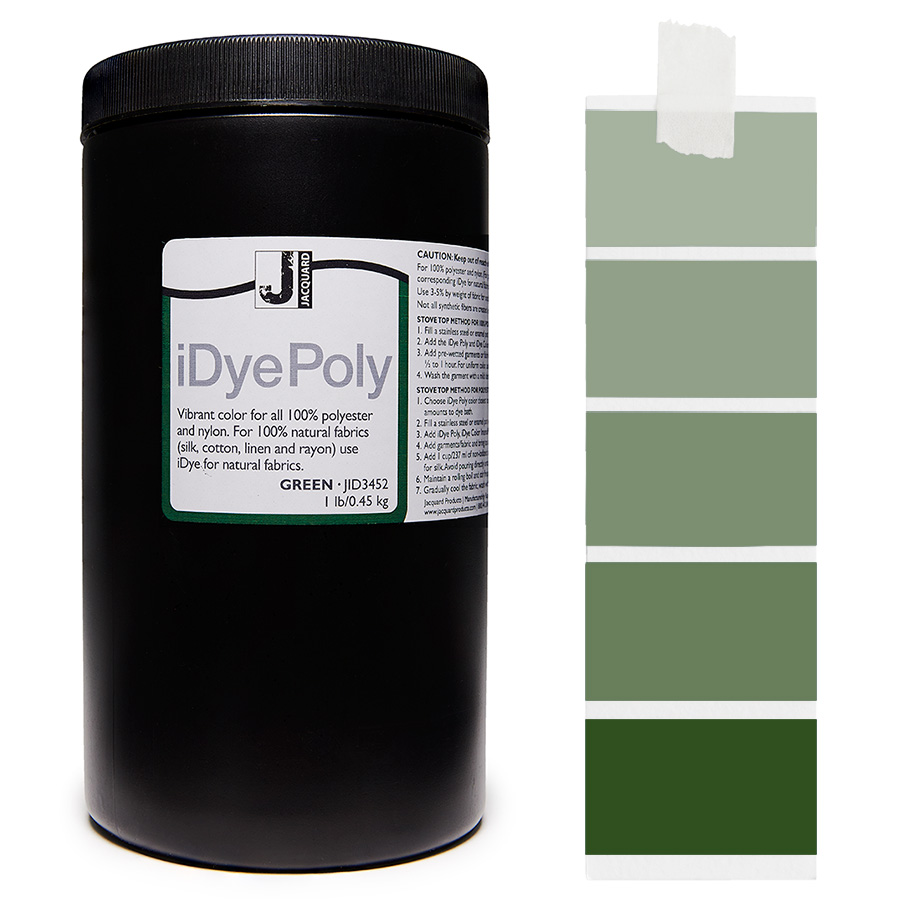
Content: 0.45 Kilogram (€199.89* / 1 Kilogram)
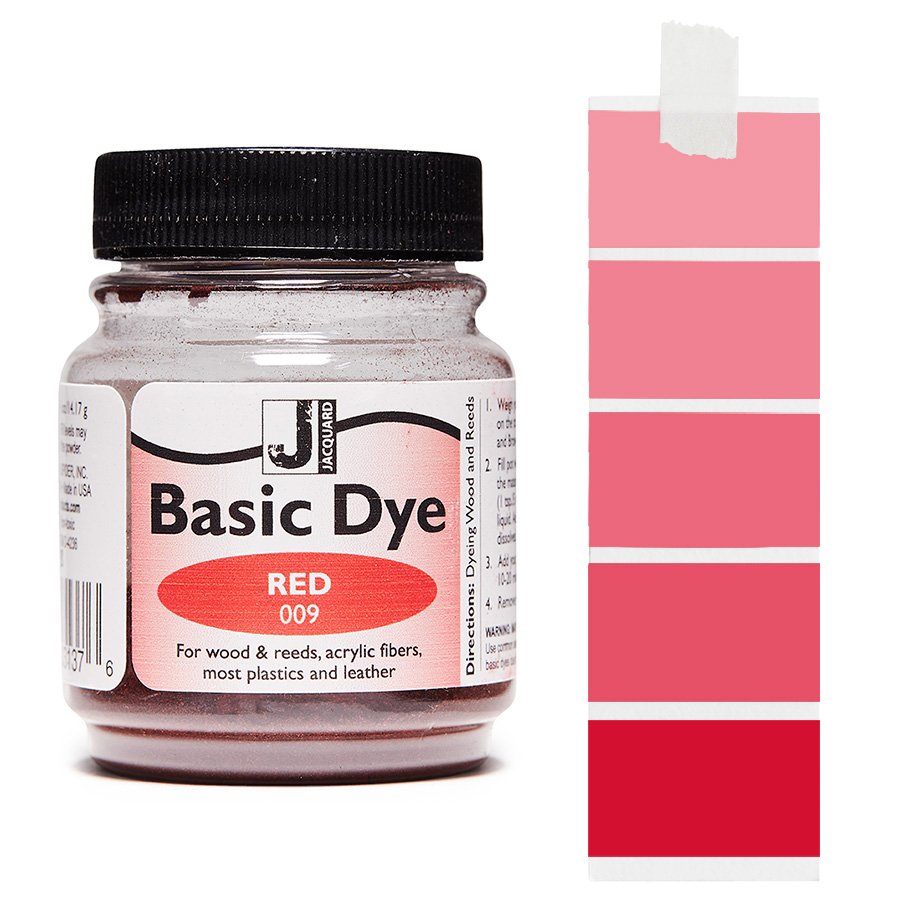
Content: 14 Gram (€0.43* / 1 Gram)
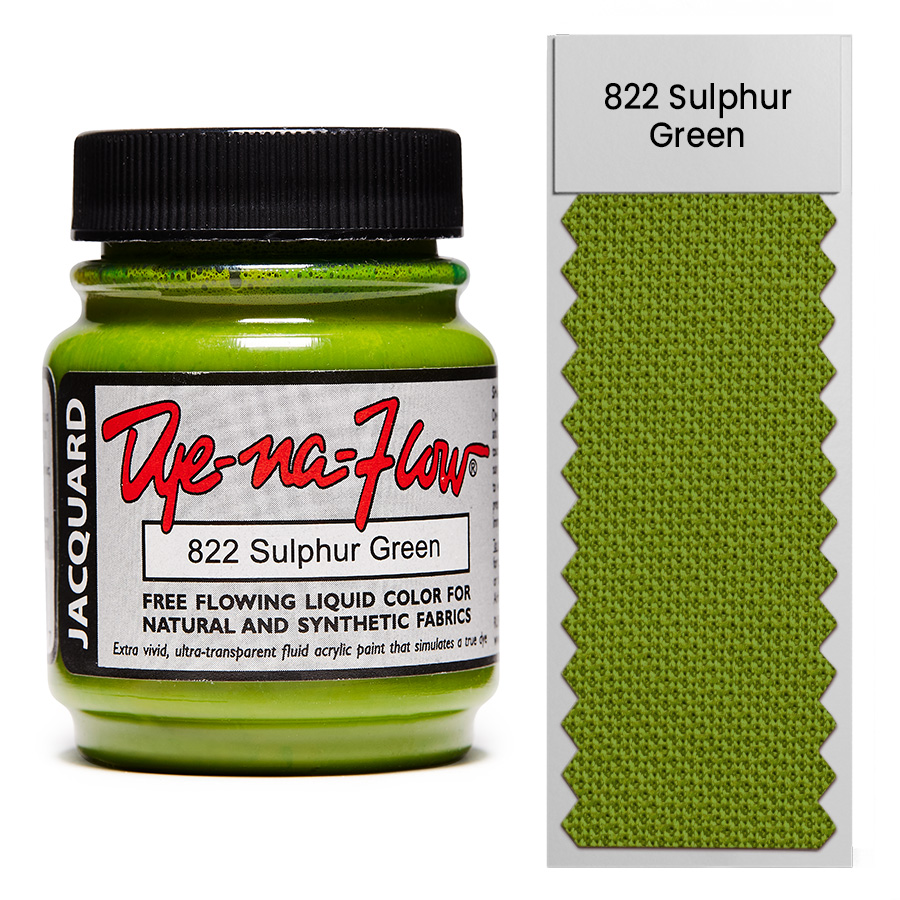
Content: 0.067 Litre (€103.73* / 1 Litre)
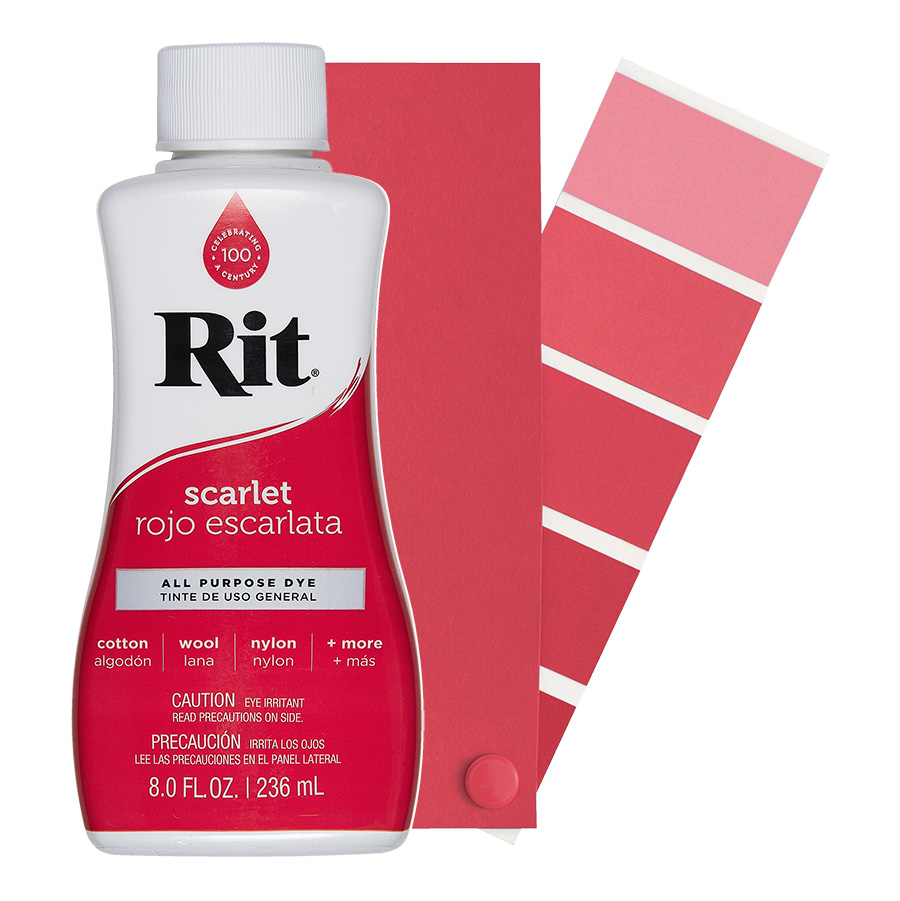
Content: 0.236 Litre (€29.45* / 1 Litre)
Customer Also Bought

Content: 0.18 Litre (€138.61* / 1 Litre)
Content: 0.118 Litre (€109.75* / 1 Litre)
Content: 0.118 Litre (€109.75* / 1 Litre)
Content: 0.118 Litre (€109.75* / 1 Litre)
Content: 0.118 Litre (€63.14* / 1 Litre)
Content: 0.118 Litre (€63.14* / 1 Litre)

Content: 0.118 Litre (€67.37* / 1 Litre)
Content: 0.236 Litre (€29.45* / 1 Litre)