 We ship worldwide
 Top customer satisfaction!
 Many payment options

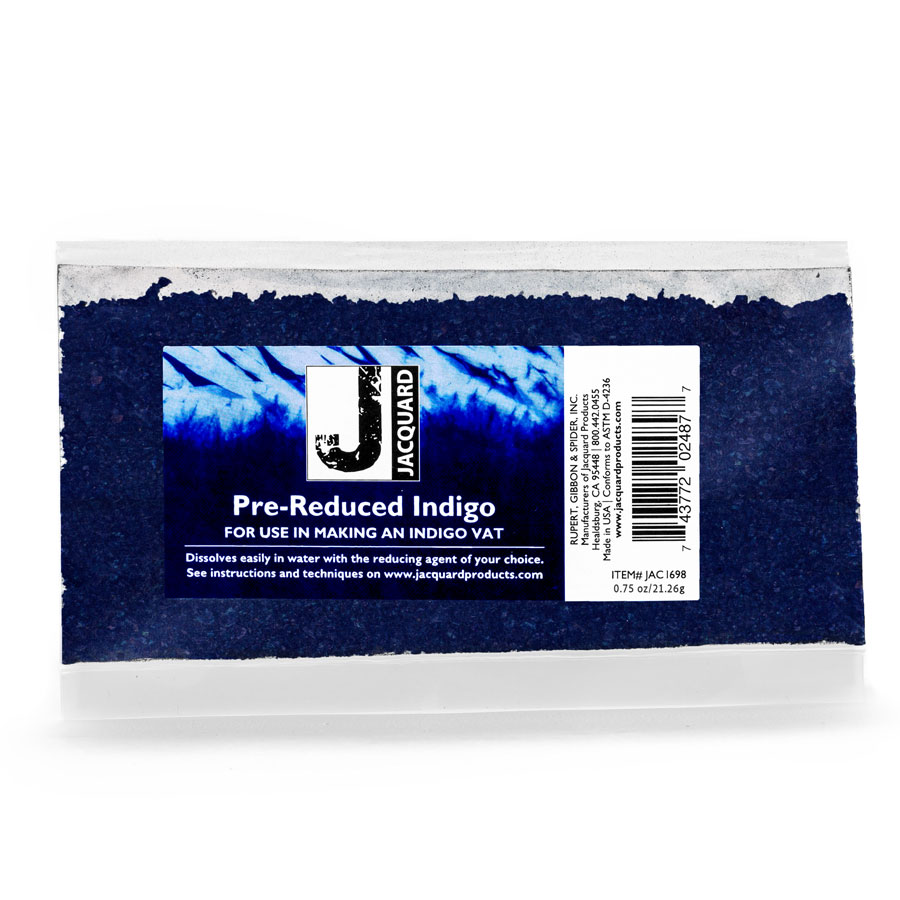
Indigo Textile Dye - Jeans Blue | 21g
Available, delivery time: 1-3 days
Jacquard Indigo: the blue of blue jeans to dye yourself
You dip a white cloth into a yellow-green liquid. You pull it out and it is green.
Then the little miracle happens: in the air it turns blue before your eyes.
This is Indigo, the oldest blue dye in the world and still the colour of blue jeans today.
Jacquard supplies it 60% pre-reduced. Instead of lye and a lot of patience, you work with soda and a reducing agent and your dye vat is ready in an hour.
21 g are enough for 15 litres of dye bath and up to 2.5 kg of fabric, that is about 15 T-shirts.
At a glance
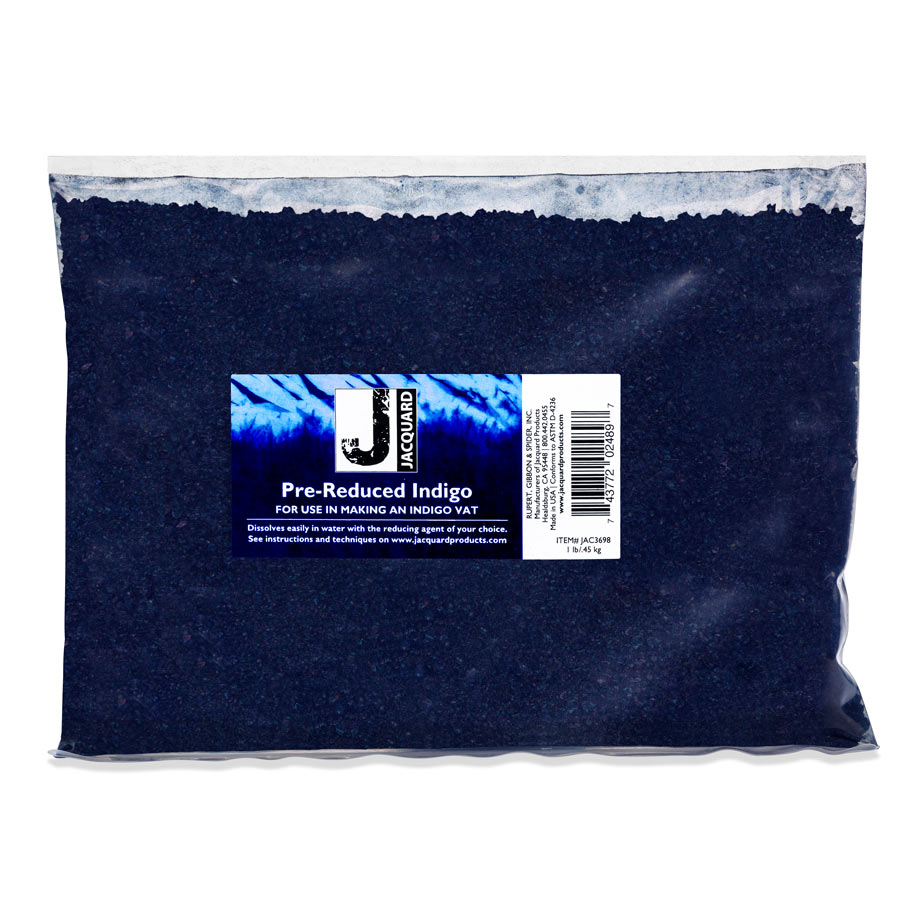
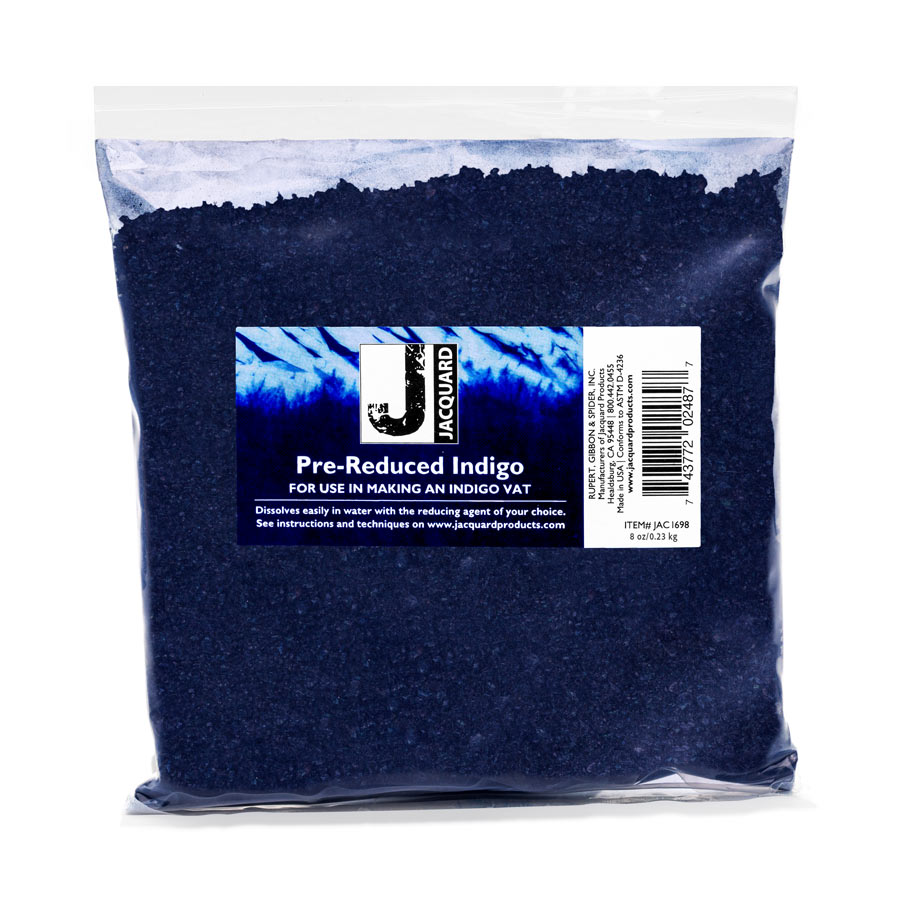
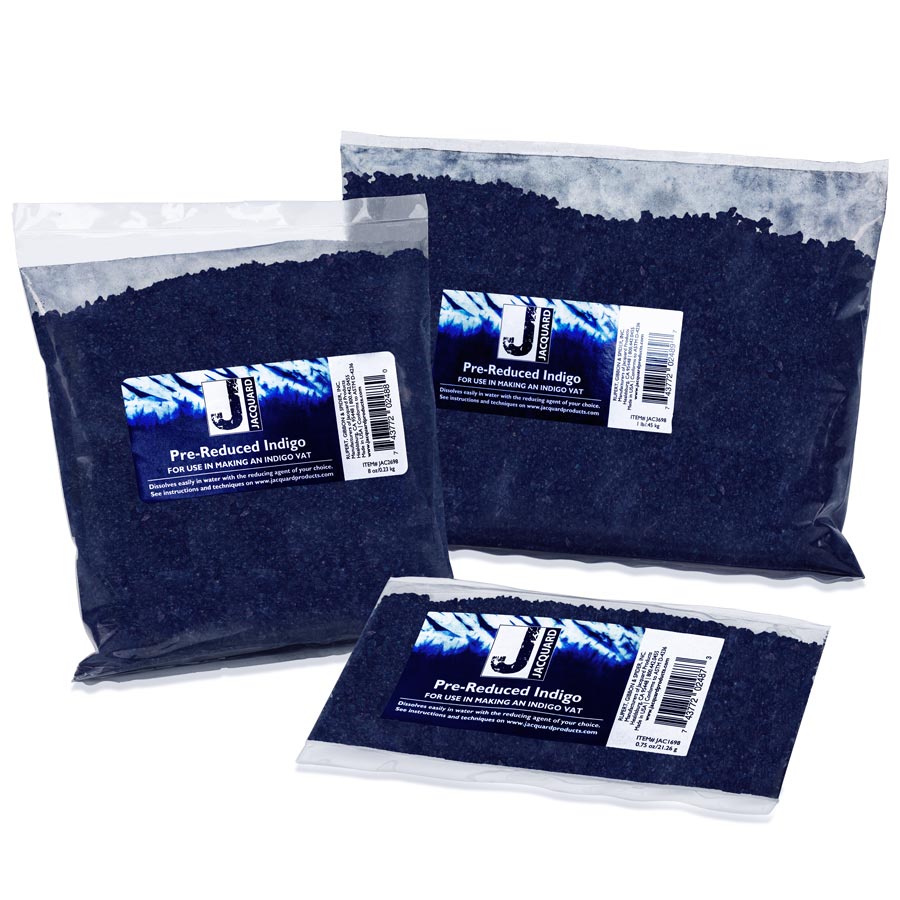
• Pre-reduced indigo as powder, 21 g, 230 g or 450 g
• Dyes all natural fibres: cotton, linen, hemp, silk, wool and wood
• Vat prepared with warm water, soda and reducing agent, no boiling
• 21 g for 15 litres of dye bath and up to 2.5 kg of fabric
• The dye bath lasts several days and can be used several times
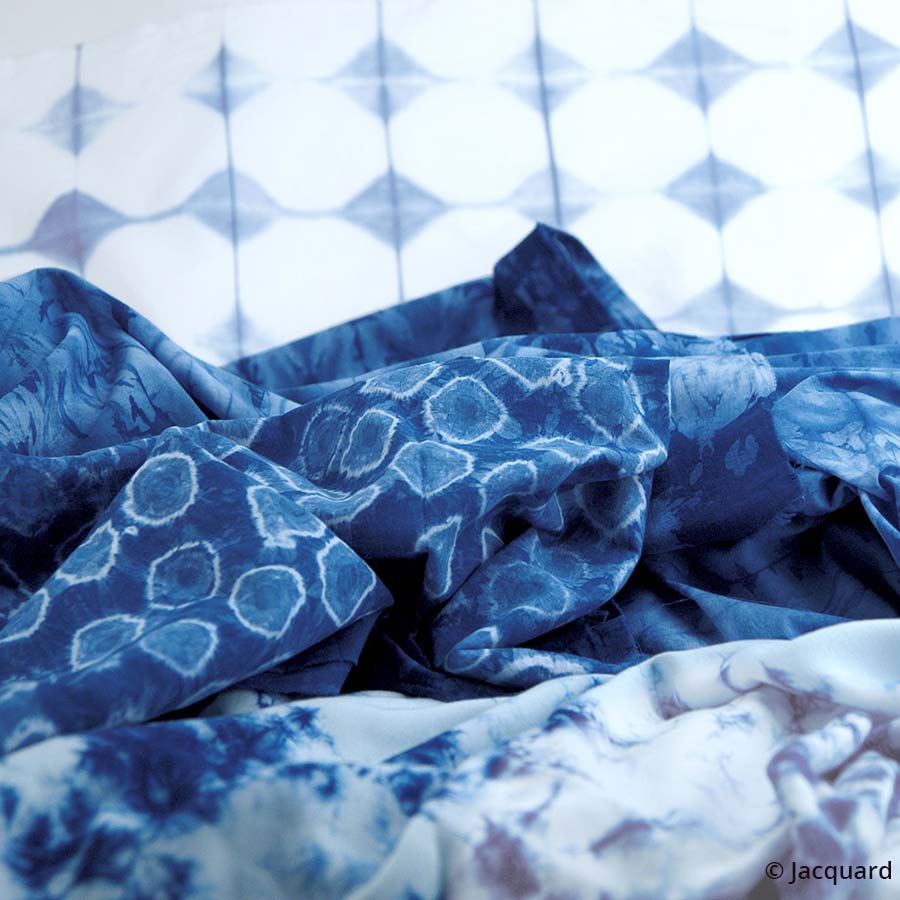
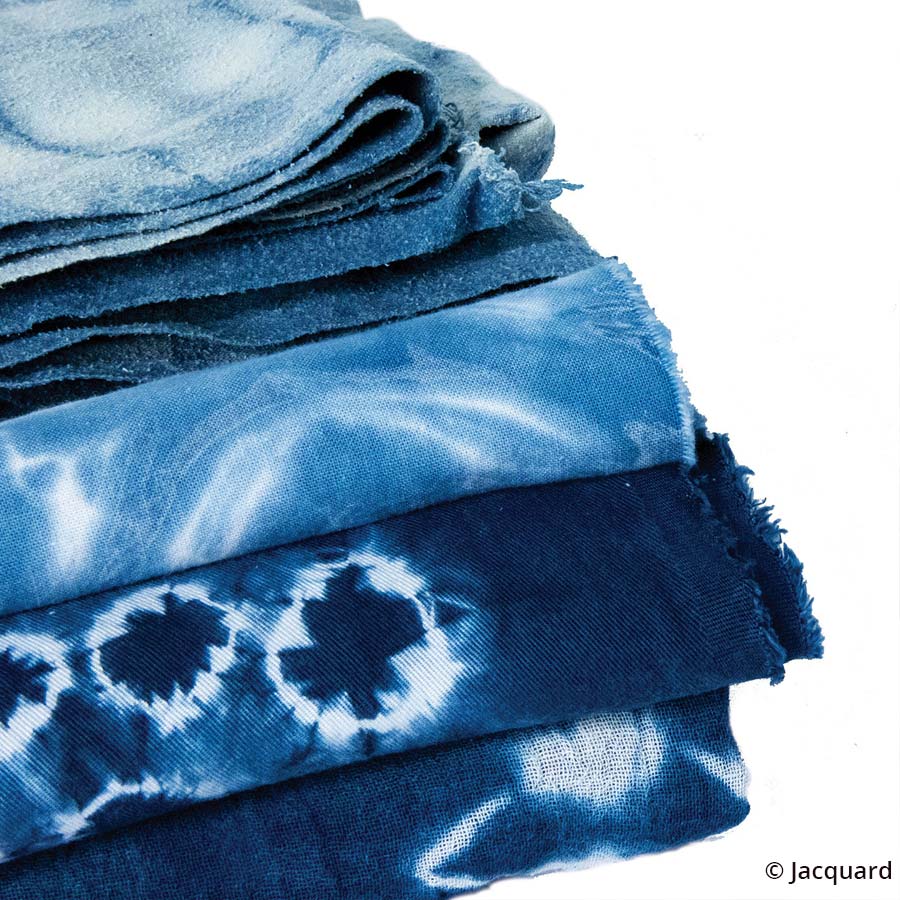
• From sky blue to navy blue, depending on the number of dips
What is indigo?
Indigo is found in plants that grow all over the world. It is practically the only blue dye that nature produces. Cultures on every continent have dyed with it for thousands of years and even today every pair of blue jeans gets its blue from indigo.
Jacquard's indigo is made synthetically and is molecularly identical to the natural dye.
Green in, blue out: how indigo works
Indigo does not simply dissolve in water. Only a reducing agent turns it into a yellow-green, soluble form, the so-called vat. In this form the dye penetrates the fibre.
When you pull the fabric out, it is green at first. Only the oxygen in the air turns it blue. This moment is magical every single time.
The more often you dip and let the fabric oxidise in the air, the darker the blue becomes: from light sky blue to the deepest navy blue.
Ideal for shibori and patterns
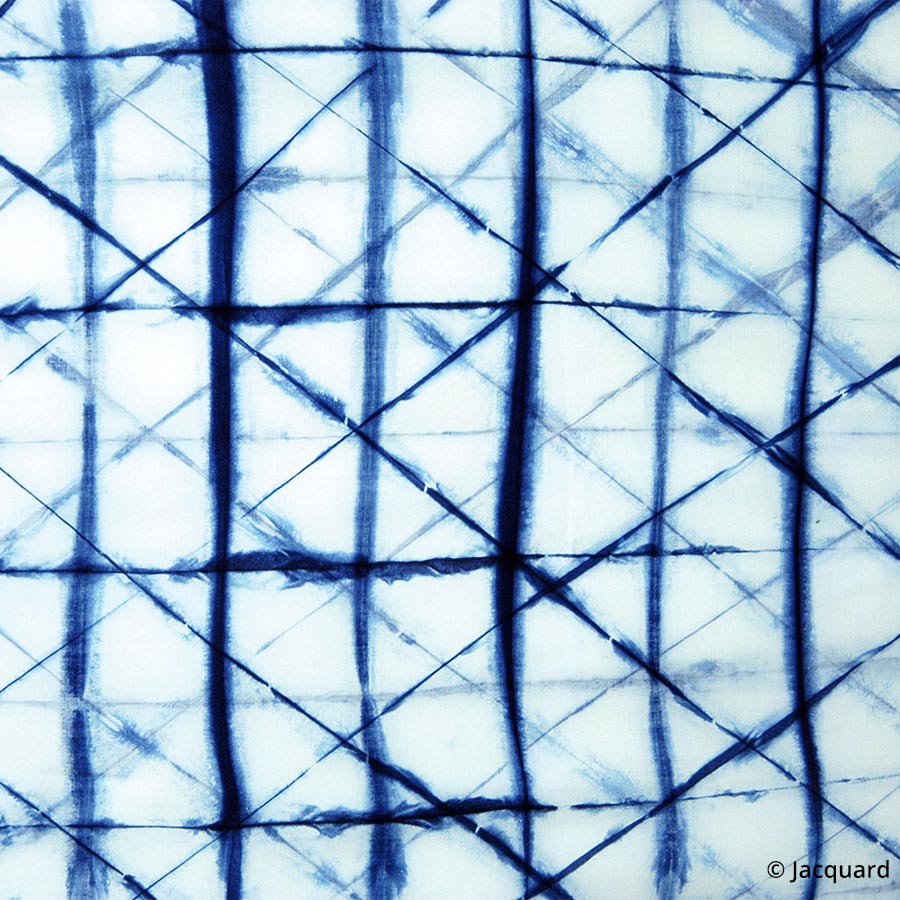
Because the colour only reaches where the vat touches the fabric, indigo is perfect for pattern techniques: folding, tying, clamping between wooden boards, wrapping around a pipe. Japanese shibori lives on this. For costumes with a handcrafted character and historical fabrics, there is hardly anything more authentic.
Which materials can I dye?
All natural fibres: cotton, linen, hemp, canvas, silk and wool and also wood. The vat is prepared with warm, not hot, water. That is why indigo is also gentle on wool and silk.
What else do I need?
For 21 g of indigo and 15 litres of dye bath:
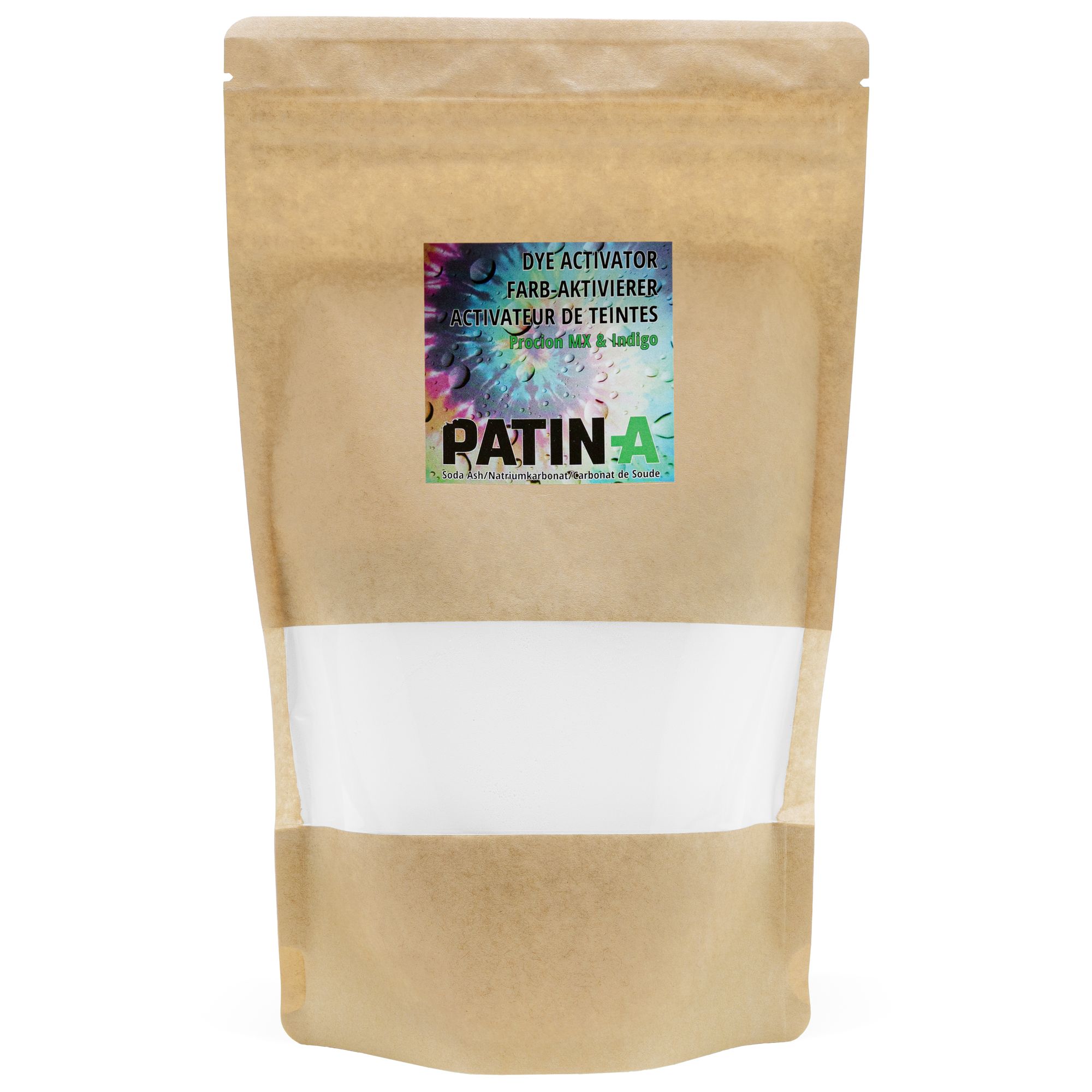
• 100 g soda: PATIN-A Soda or Jacquard Soda Ash
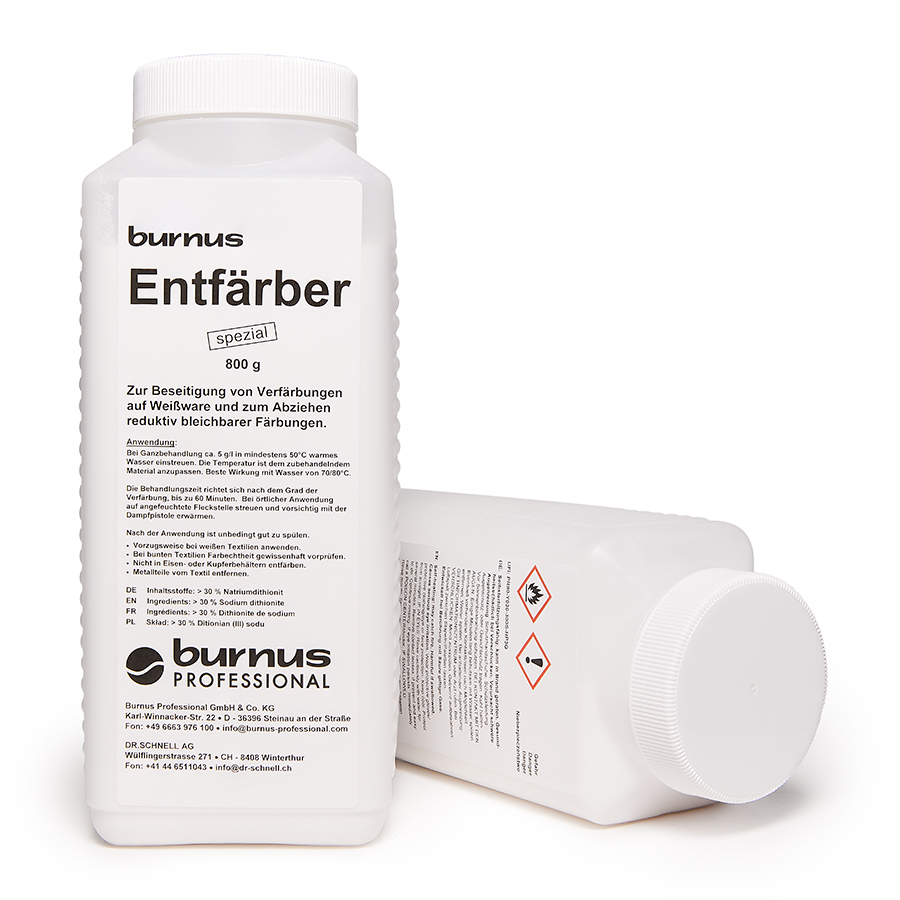
• 50 g reducing agent: PATIN-A Sodium Hydrosulfite or Jacquard Sodium Hydrosulfite
• A bucket of 20 to 30 litres with a tightly closing lid
• A long stick for stirring
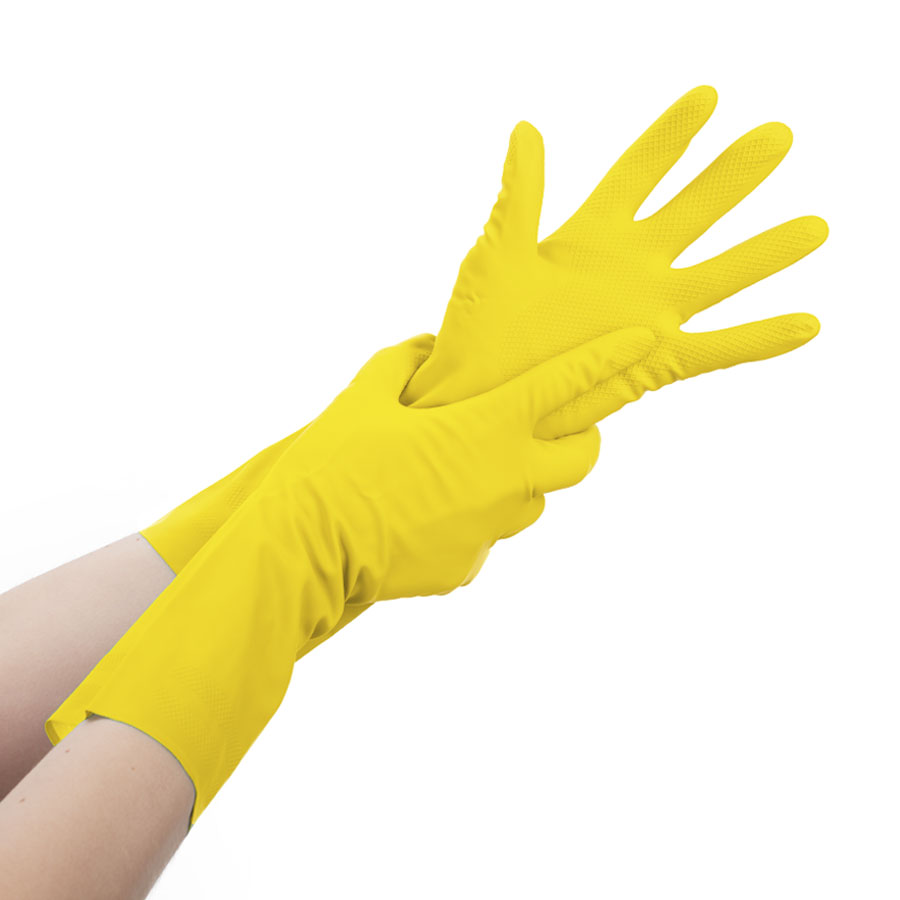
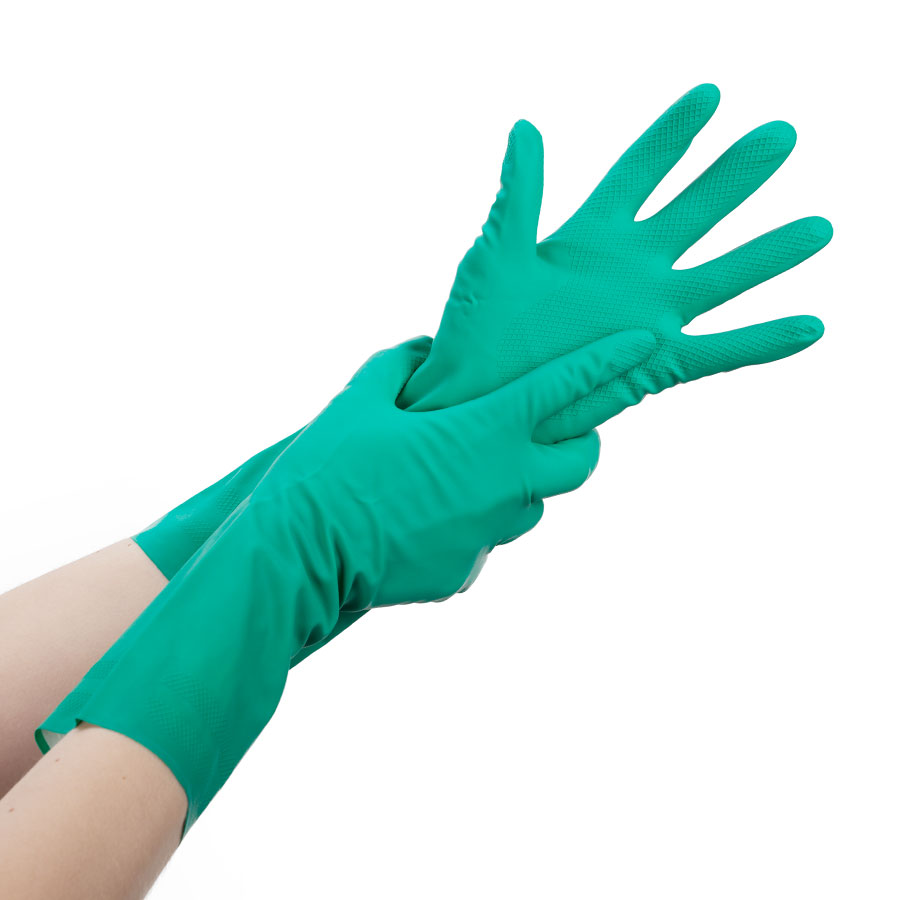
• Rubber gloves and a plastic sheet as a base
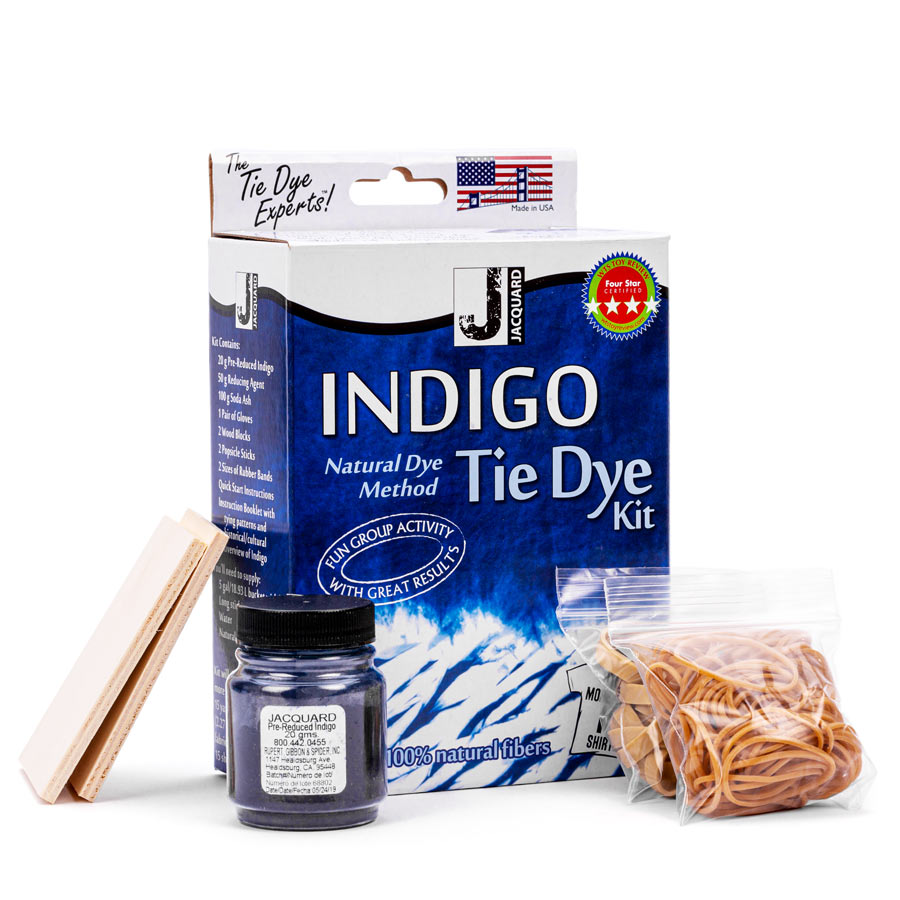
Everything in one box, including indigo, soda, reducing agent, gloves and wooden parts for tying, is available in the Jacquard Indigo Tie-Dye Kit.
Instructions and FAQ
You can read step by step how to prepare the vat, dye and care for it in the “Dyeing instructions” tab. You will find answers to frequently asked questions in the “FAQ” tab.
Quick guide for the impatient
Preparing the vat (15 litres):
1. Pour 15 litres of warm water into a tall, round bucket with a lid.
2. While stirring, slowly add 100 g soda and 50 g sodium hydrosulfite.
3. Sprinkle in 21 g indigo and stir.
4. Stir in one direction until a gentle whirlpool forms. Slow the whirlpool by dragging the stick along the edge of the bucket. Then remove the stick slowly.
5. Put the lid on and leave to rest for 30 to 60 minutes. Gently push aside the blue skin on the surface: the liquid underneath should be clear yellow to yellow-green. If it is still blue, wait another 30 minutes.
For 10 litres, use 14 g indigo, 67 g soda and 33 g sodium hydrosulfite.
Dyeing:
1. Soak the fabric in water beforehand and wring it out well.
2. Lower it into the vat slowly and without splashing and move it gently under the surface for a few minutes.
3. Take it out and let it oxidise in the air: the fabric comes out of the vat green and turns blue within about 20 minutes.
The vat keeps best at 20 to 29 °C. For darker shades, dip several times in a row rather than adding more indigo.
Hazard information

Warning. May cause damage to organs through prolonged or repeated exposure.
Do not breathe dust. Get medical advice/attention if you feel unwell.
Based on the manufacturer's safety data sheet. Always read the label and product information before use.
Sales unit: 1 piece (21g / 230g / 450g)
🇺🇸 Made in USA
Jacquard Indigo: Dyeing instructions
How do I dye with indigo?
Preparation:
This special indigo formulation is already 60% reduced, so you can use soda ash instead of lye in the dye vat.
You will need:
• 20 g pre-reduced indigo (water-soluble)
• 100 g sodium carbonate (soda)
• 50 g reducing agent sodium dithionite (e.g. Jacquard Sodium Hydrosulfite)
• a 20 to 30 L bucket with a lid (e.g. a Hobbock bucket, these are very inexpensive and tall)
• a long stick for stirring
• 15 L warm water
• Natural fabrics (up to 2.5 kg of fabric or 15 T-shirts)
• possibly a plastic sheet to stand the bucket on (to protect the floor)
The pre-reduced indigo dye is extremely easy to use and makes setting up an indigo vat almost effortless. There is no need to mix the indigo granules beforehand, because they dissolve easily in water.
Setting up the indigo vat:
1. Fill a 20 L bucket with 15 L warm tap water (use a bucket with a small diameter).
2. Empty the packet of pre-reduced indigo dye into the water. Stir.
3. While stirring, slowly add the soda (sodium carbonate) and the reducing agent (sodium dithionite) to the water.
4. Stir the vat gently but thoroughly in a circular motion in one direction. Once the vat is well mixed, slow down and reverse the direction of stirring. Draw the stirring stick along the outer edge of the vat before removing it. Cover the vat with a lid and let it rest for at least 15 minutes to half an hour. For best results, wait an hour.
5. After the contents of the vat have settled, remove the lid. The top of the dye bath may be covered with a thin blue skin (rather than the traditional flower of foam).
Wear gloves and gently push the skin (or the flower) to one side. The dye bath should have a clear yellow or yellow-green colour beneath the flower. If not, wait another half hour and then check again.
Once prepared, the dye bath lasts several weeks.
Dyeing with indigo:
1. Fold, tie or bind your garment or fabric (see “Pattern ideas” on pages 7-11 of the enclosed instructions)
2. Wet the fabric thoroughly or soak it in water.
3. When you start dyeing, take the lid off the vat. If a layer of thin blue skin is floating on top, gently push it to one side (be sure to wear gloves).
4. Squeeze excess water and air out of the fabric.
5. While still squeezing the fabric, slowly lower the textile into the dye vat. After immersion, the item is moved gently to make sure the colour penetrates evenly into the untied parts. In this way you can move the textile under the water surface in the vat for several minutes. Do not let the fabric drop into the vat or sink to the bottom. As residues settle on the bottom of the vat, you should not stir them up during dyeing. These residues can cause stains on your dyed piece.
6. When you are ready to take the fabric out of the vat, squeeze it out just below the surface while slowly removing it from the vat. You should avoid splashing on the water surface, as this returns oxygen to the vat. The fabric will be as yellow-green as the contents of the container. Very slowly the fabric turns blue as soon as oxygen in the air comes into contact with it. Put the cover back on the container.
7. Set the fabric aside so that the piece can oxidise completely. Turn the piece often so that oxygen reaches everywhere and let it oxidise for 20 minutes.
8. When the colour has oxidised, you can either repeat steps 4 to 7 to achieve darker shades of blue (the colour is much darker when wet. When dry, the dark blue usually becomes a medium blue). Or you can rinse out the excess indigo by washing the piece with a mild detergent and warm water.
9. As soon as you have finished dyeing, gently stir the vat with the stirring stick in a circular motion as before. Put the lid back on the vat and let it rest for at least an hour before using the dye liquor again. The liquor lasts several days and you can dye several times.
10. When the colour is exhausted or you do not want to dye any more, pour the contents down the drain. You can clean the bucket and utensils with a cleaning agent (e.g. scouring powder) or soap.
If you want to store the dye liquor: store the colour in the vat (closed with the lid) in a place with a room temperature between 20-29° C. Keep it out of the reach of children and animals.
Care of an indigo vat
An indigo vat can have a very long service life with regular use and care.
The best dye vat is cylindrical with a tight-fitting lid (e.g. a Hobbock bucket). This gives you room to dye the fabric without it touching the bottom, and the surface in contact with air is minimised.
Occasionally it may be necessary to add more of the reducing chemicals and the pre-reduced indigo dye to keep the vat going.
Always try to dissolve the sodium carbonate (soda) in a little water before adding it to the vat. Add only a little at a time. It is better to add often than too much the first time.
When you add something to the vat, it is important to wait for the chemical reaction (at least one hour) before adding more.
• If the vat looks blue-green rather than yellow-green, or if you see blue particles floating in the liquid, the vat needs more reducing. Add 2 to 10 grams of reducing agent (sodium dithionite) each time.
• If the colour looks weak, or the liquid in the vat is grey and watery, more of the pre-reduced indigo dye is needed. Add 2 to 10 grams each time.
Contents: 21g / 230g / 450g
Jacquard Indigo: Frequently asked questions
Why is my fabric green when I pull it out of the vat?
That is correct. In the vat, indigo is yellow-green. Only in the air does it combine with oxygen and turn blue. After each dip, let the fabric oxidise in the air for about 20 minutes and turn it while doing so.
How do I get a dark blue?
Through several dips. Dip, let oxidise, dip again. Each round makes the blue darker. The colour looks darker wet than dried.
My vat is blue-green instead of yellow-green. What can I do?
Then the vat needs more reducing agent. Add 2 to 10 g of PATIN-A Sodium Hydrosulfite or Jacquard Sodium Hydrosulfite, stir carefully and wait at least one hour before continuing to dye.
How long does the dye bath last?
With a lid and proper care, several days. Stir carefully after dyeing and let the vat rest for at least an hour before the next dyeing.
Can I dye wool and silk with indigo?
Yes. The vat is prepared with warm, not hot, water and is therefore gentle. Move wool only carefully and do not rinse with cold water.
Manufacturer:
Jacquard Products | Rupert, Gibbon & Spider, Inc.
1147 Healdsburg Ave.
Healdsburg, CA 95448
USA
service@jacquardproducts.com
Responsible person in the EU (importer):
ART SELECT GmbH & Co. KG
Schützenstraße 22
21407 Deutsch Evern
Germany
vertrieb@artselect.de
Login
2 reviews
21 July 2022 05:39
Super schnell und tolle Produkte
Ich habe Indigofarbe und das dazugehörige Reduziermittel bestellt. Die Lieferung kam sehr schnell und nach einem ersten Testfärben, bin ich von dem Produkt begeistert. Intensive blaue Farbe und nach dem Rezept von Patina auch sehr leicht zu verarbeiten. Ich habe schon verschiedene Indigofarbstoffe ausprobiert, pflanzlich oder synthetisch, und bin von der der vorreduzierten Variante von Patina begeistert, da sie einfacher in der Anwendung ist und die Farbe sehr gleichmäßig und kräftig ist.
28 October 2020 14:46
Worked perfectly
Used this as part of a craft project to try making my own jeans. I've tried a few different fabric dyes in the past, and I really liked this one - the instructions were simple and it was easy to control the strength of the colour. Definitely planning to buy again!
Accessories
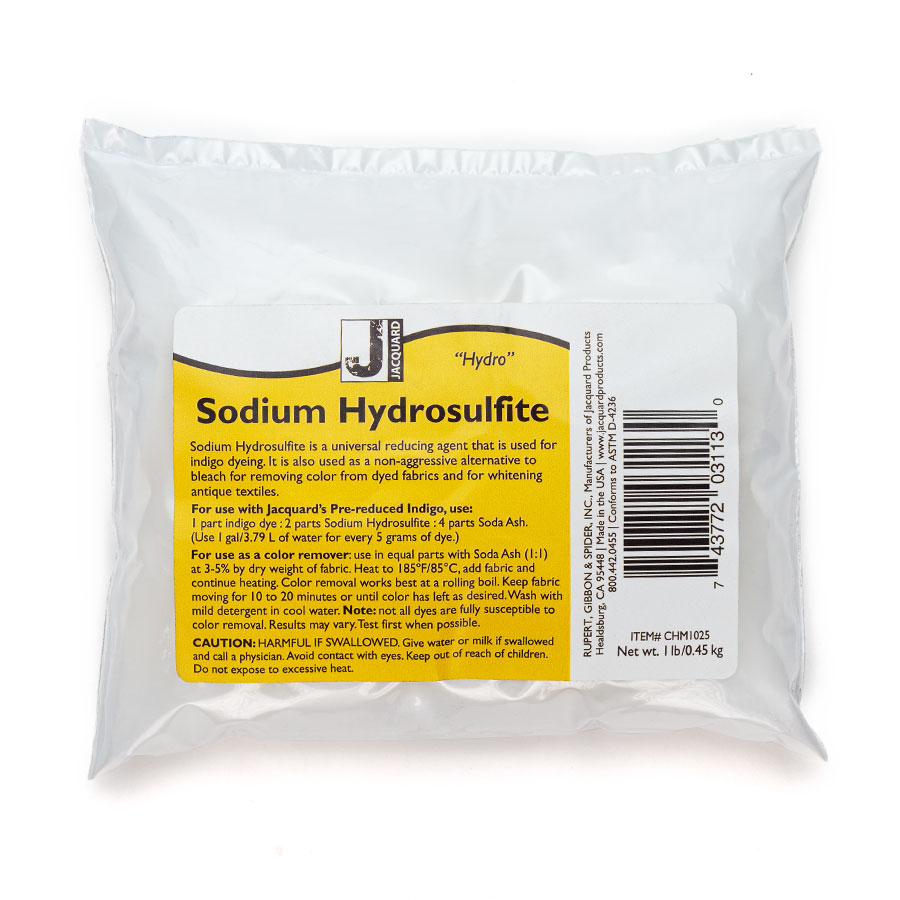
Content: 0.45 Kilogram (€42.11* / 1 Kilogram)
Content: 0.8 Kilogram (€34.94* / 1 Kilogram)
Similar Products
Content: 0.01 Kilogram (€295.00* / 1 Kilogram)
Content: 0.01 Kilogram (€315.00* / 1 Kilogram)
Content: 0.014 Kilogram (€532.14* / 1 Kilogram)
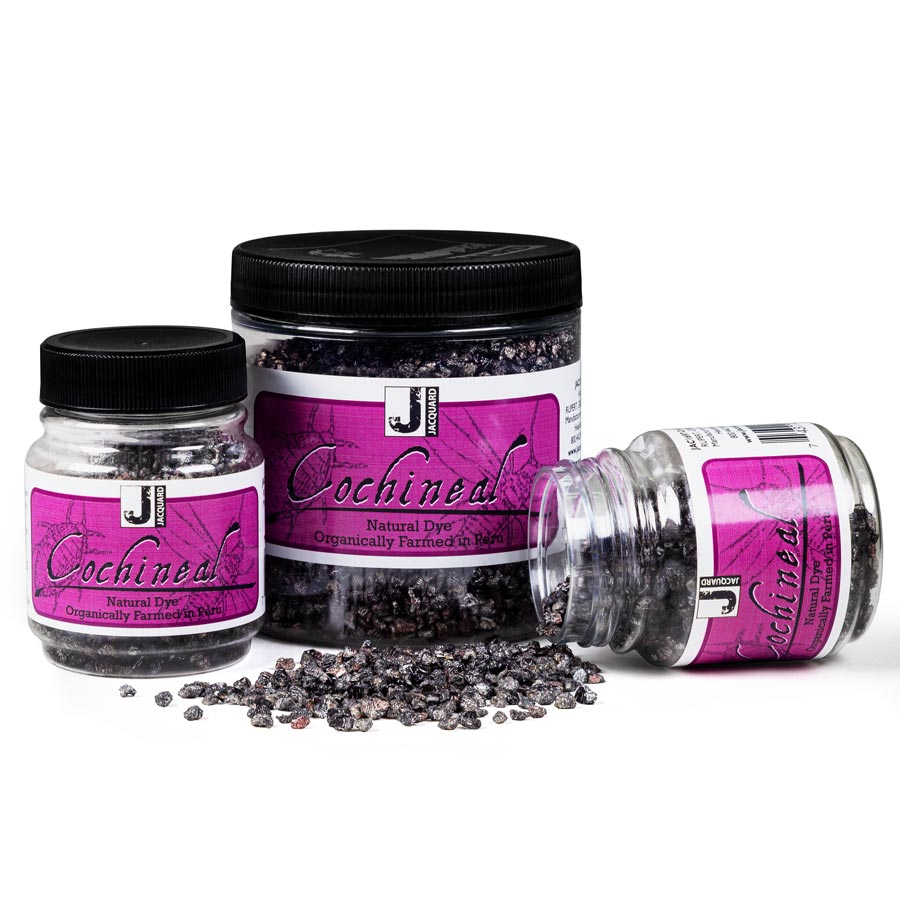
Content: 0.022 Kilogram (€861.36* / 1 Kilogram)
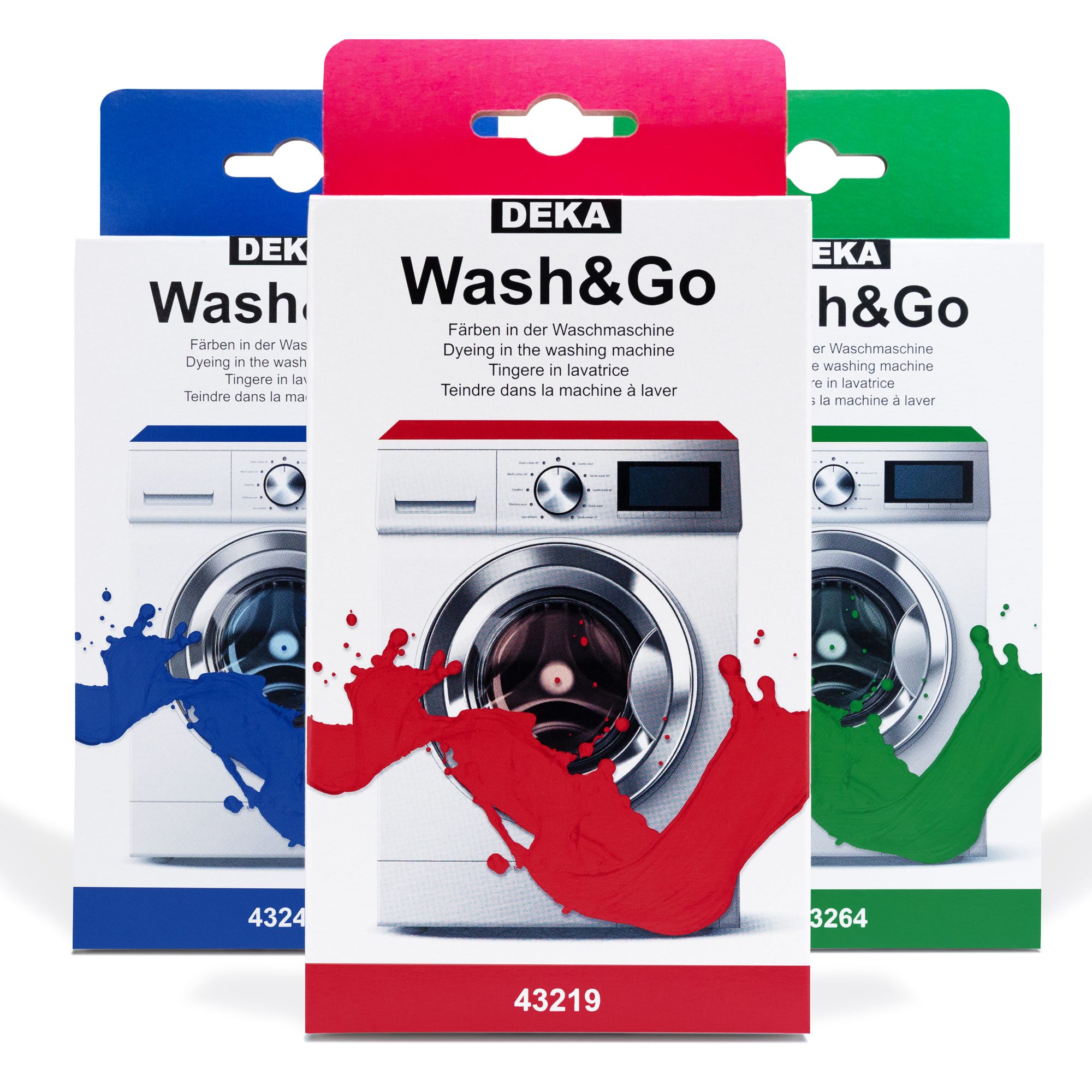
Content: 0.075 Kilogram (€106.00* / 1 Kilogram)
Customer Also Bought
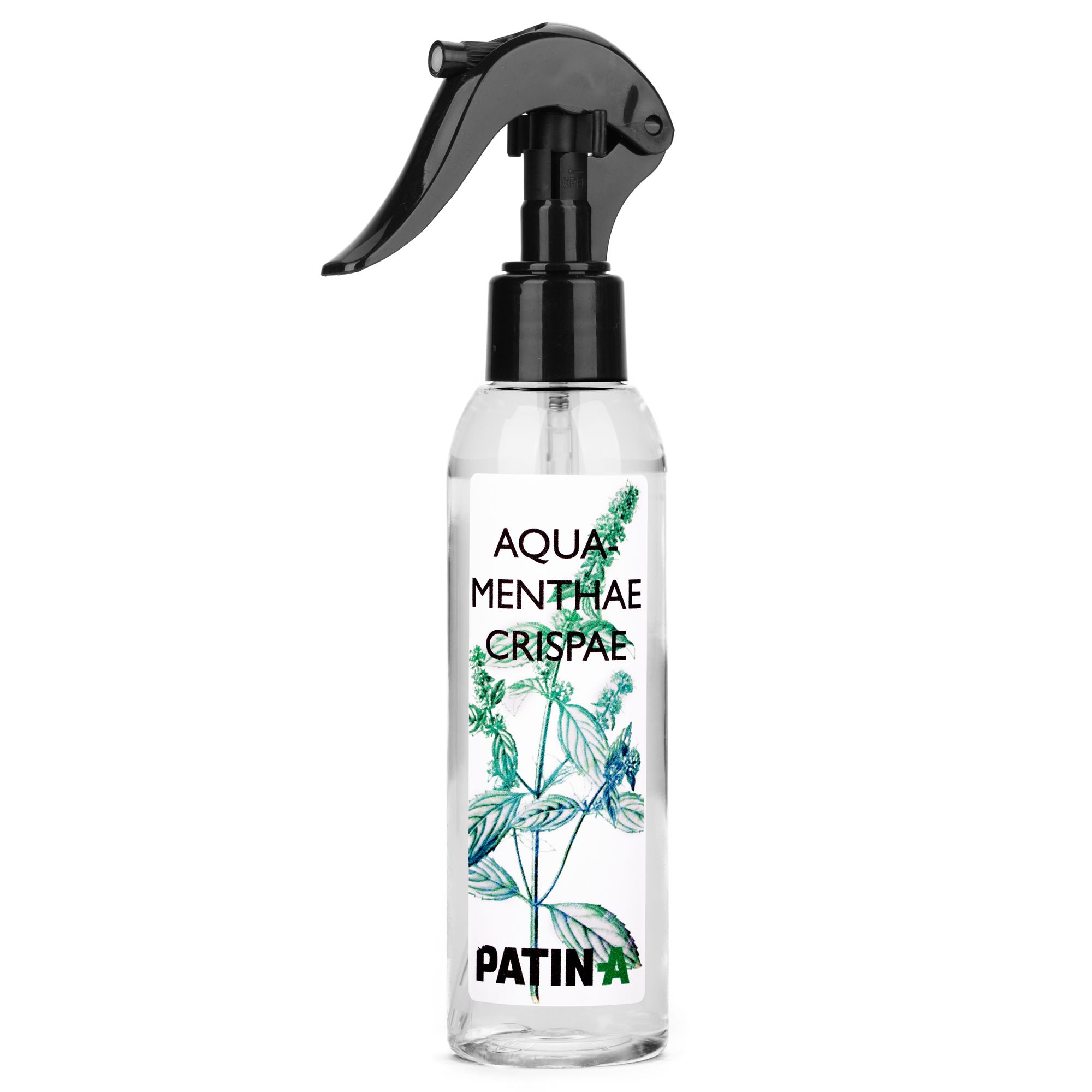
Content: 0.15 Litre (€46.33* / 1 Litre)
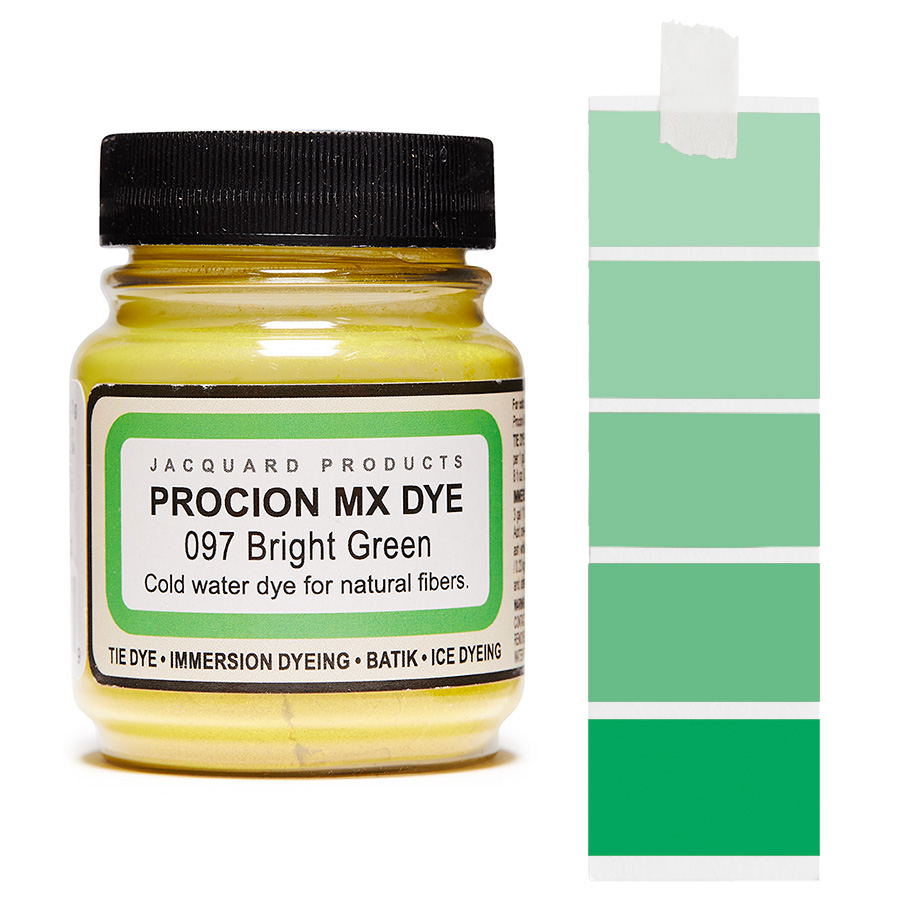
Content: 0.019 Kilogram (€286.84* / 1 Kilogram)
Content: 0.019 Kilogram (€286.84* / 1 Kilogram)
Content: 0.019 Kilogram (€286.84* / 1 Kilogram)
Content: 0.5 Kilogram (€5.90* / 1 Kilogram)
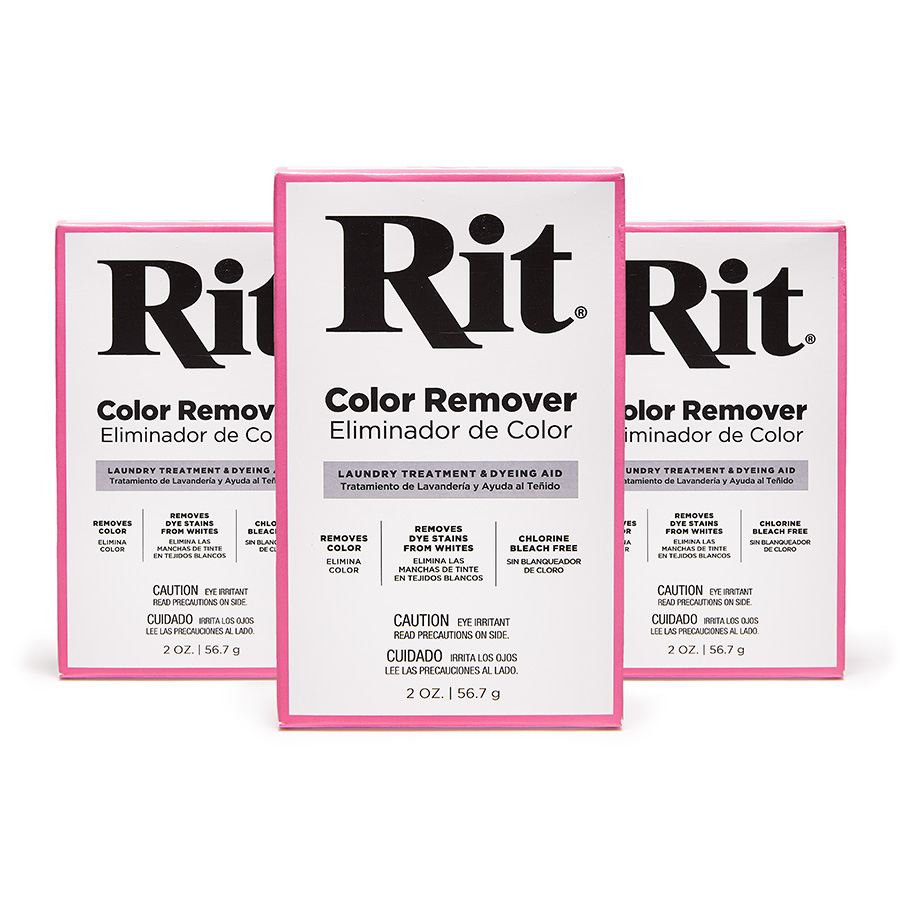
Content: 0.057 Kilogram (€86.84* / 1 Kilogram)
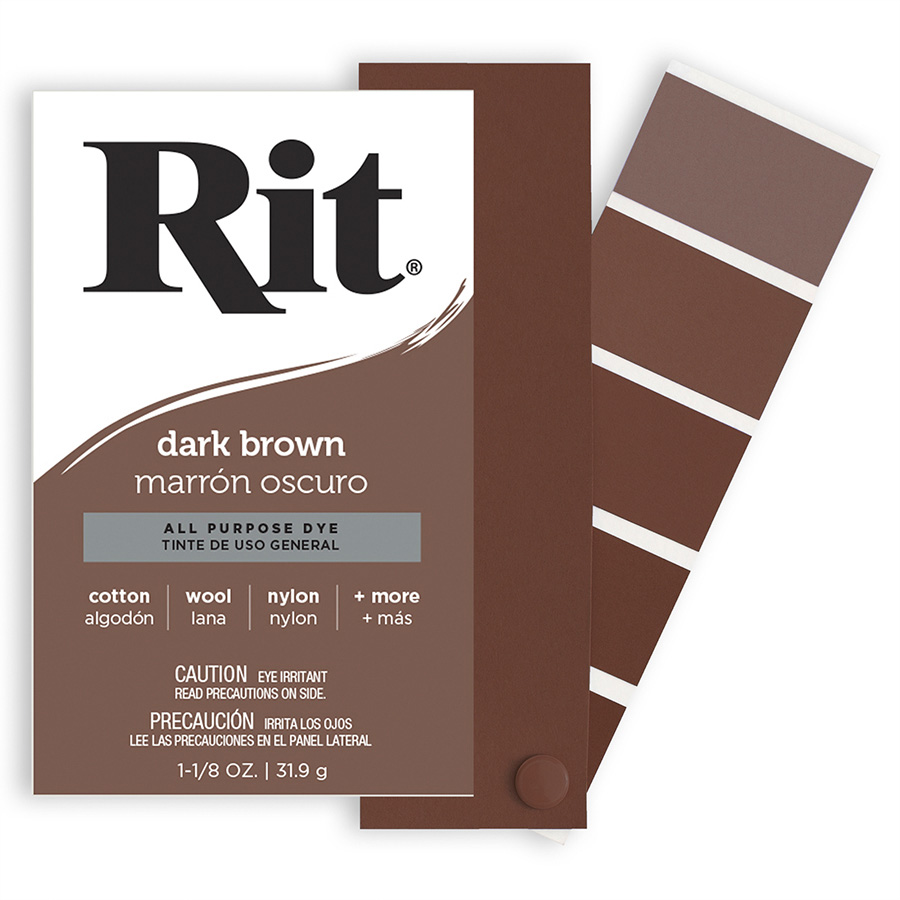
Content: 0.0398 Kilogram (€111.81* / 1 Kilogram)
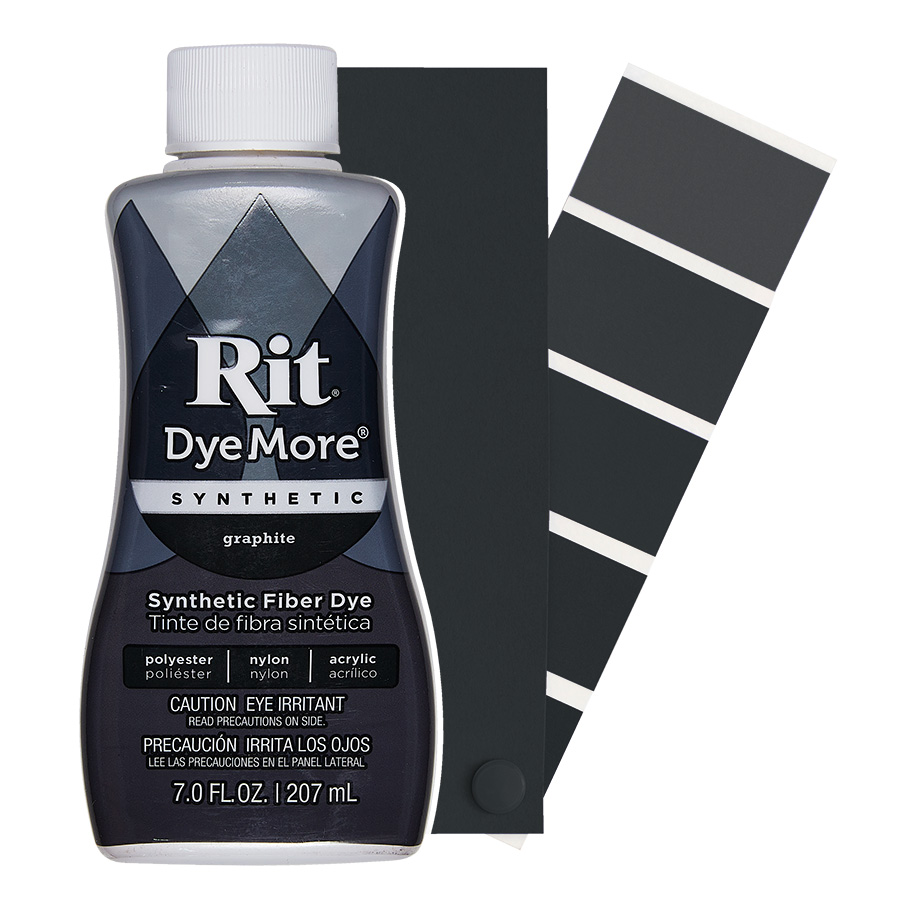
Content: 0.207 Litre (€38.41* / 1 Litre)