 We ship worldwide
 Top customer satisfaction!
 Many payment options

This blog shows how to patinate correctly, gives tips for the work in the costume department, shows the newest trends and introduces products and their use.
The main focus lies on costume distressing, leather working and textile dyeing. We show trends of the trade and aids for costume design.
Painting with Sunlight, Part 2: SolarFast
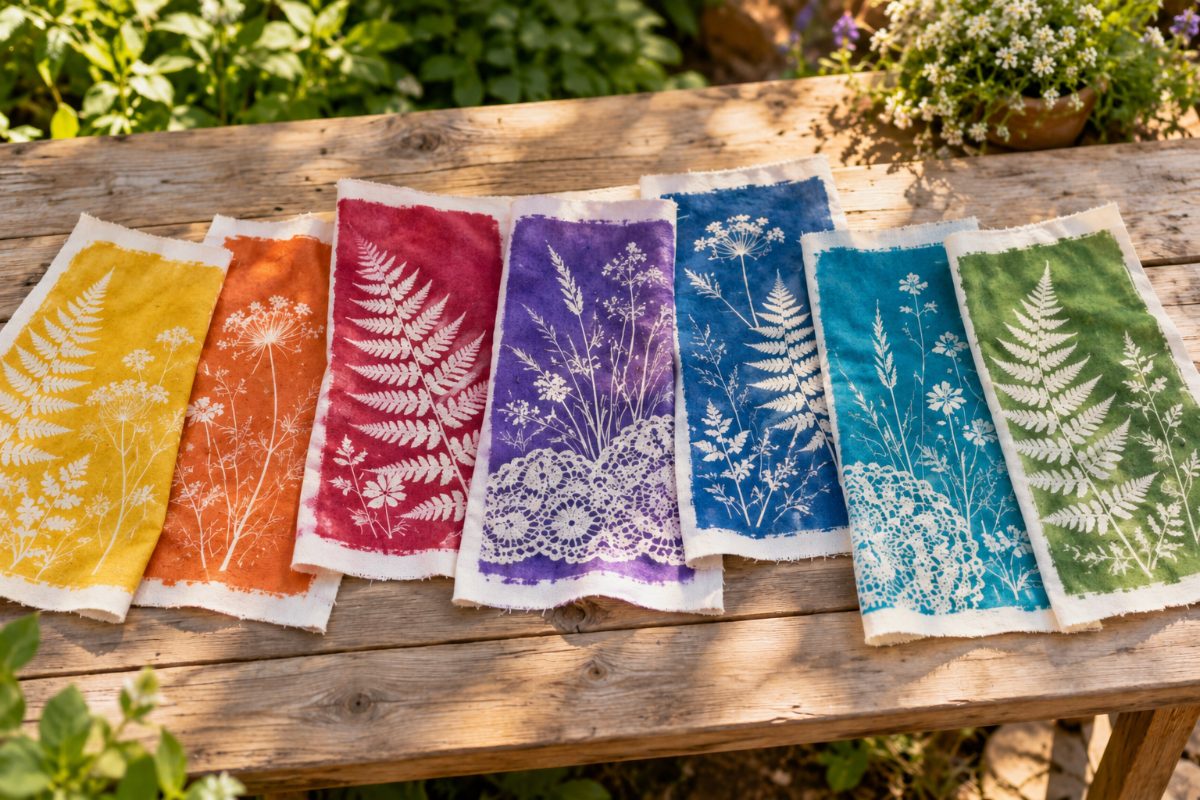
SolarFast: Sun Printing in Colour
In Part 1 we showed you how to create images in deep blue with cyanotype and sunlight. Today it is the turn of its colourful sister: Jacquard SolarFast.
The idea is the same: place a motif, let the sun do the work, rinse. But instead of just blue you have 14 shades to choose from, and you can even mix them.
What is SolarFast?
SolarFast is a light-activated dye. As long as it is damp and stays in the shade, nothing happens. Only UV light from the sun or a lamp makes the colour permanent.
Anything you place on the surface during exposure blocks the light. The background underneath stays light and a photogram is created, a shadow picture without a camera.
The big difference to cyanotype: SolarFast is ready to use. No mixing and no weighing of chemicals. Open the bottle, apply, off you go.
What you need
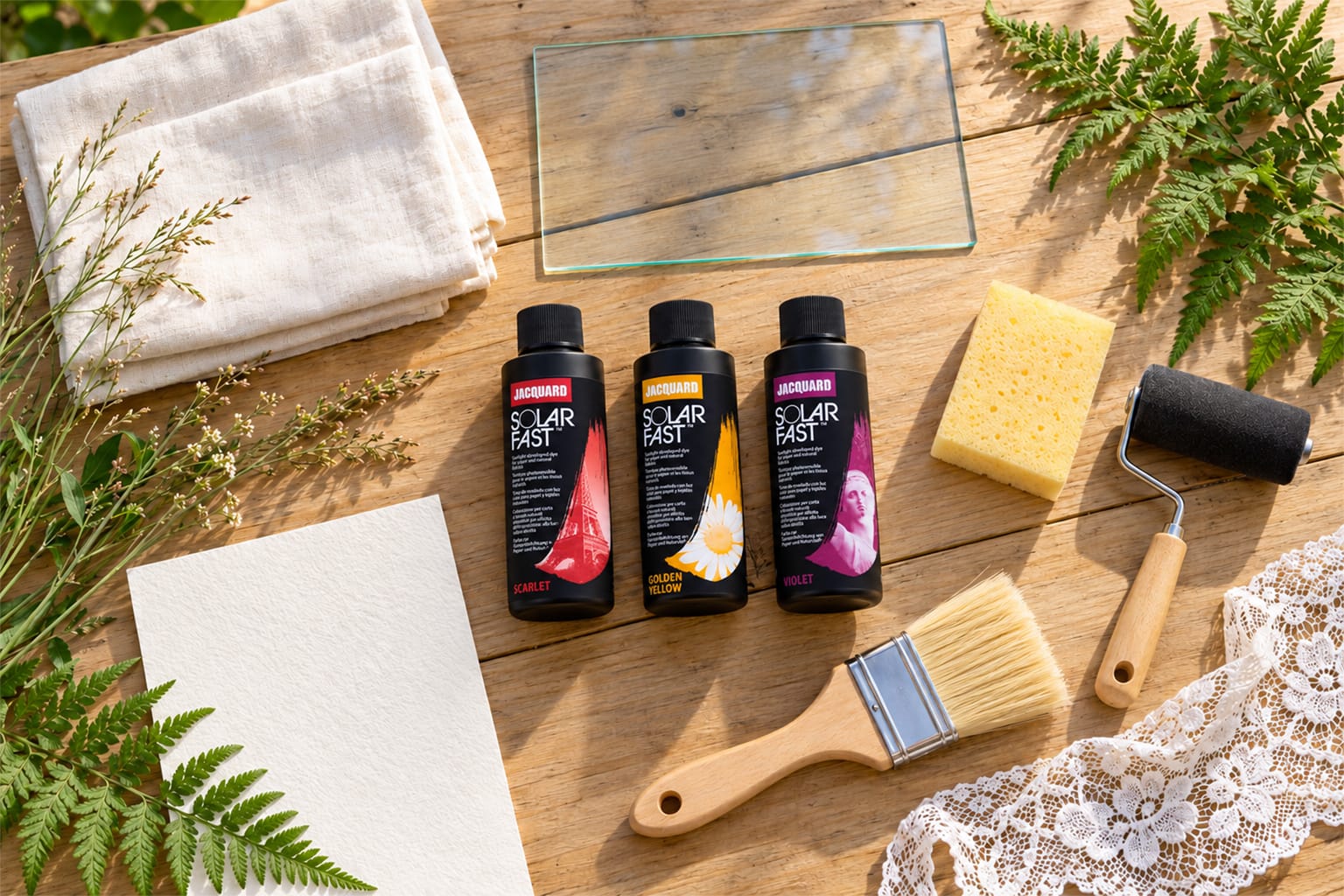
• Jacquard SolarFast in your favourite shade (118 ml or 236 ml)
• Optional: Jacquard SolarFast Wash for extra clean white areas
• Cotton, linen, silk or uncoated heavy watercolour paper
• Foam flat brush, brush, sponge or foam roller
• Things to lay on top: leaves, grasses, lace, feathers or a negative on transparency film
• A sheet of glass to keep everything flat
• For screen printing: Jacquard SolarFast Thickener
Step by step: your first SolarFast print
1. Prepare: Wash new fabric once so that no finish keeps the dye out. Work in the shade or indoors in subdued light.
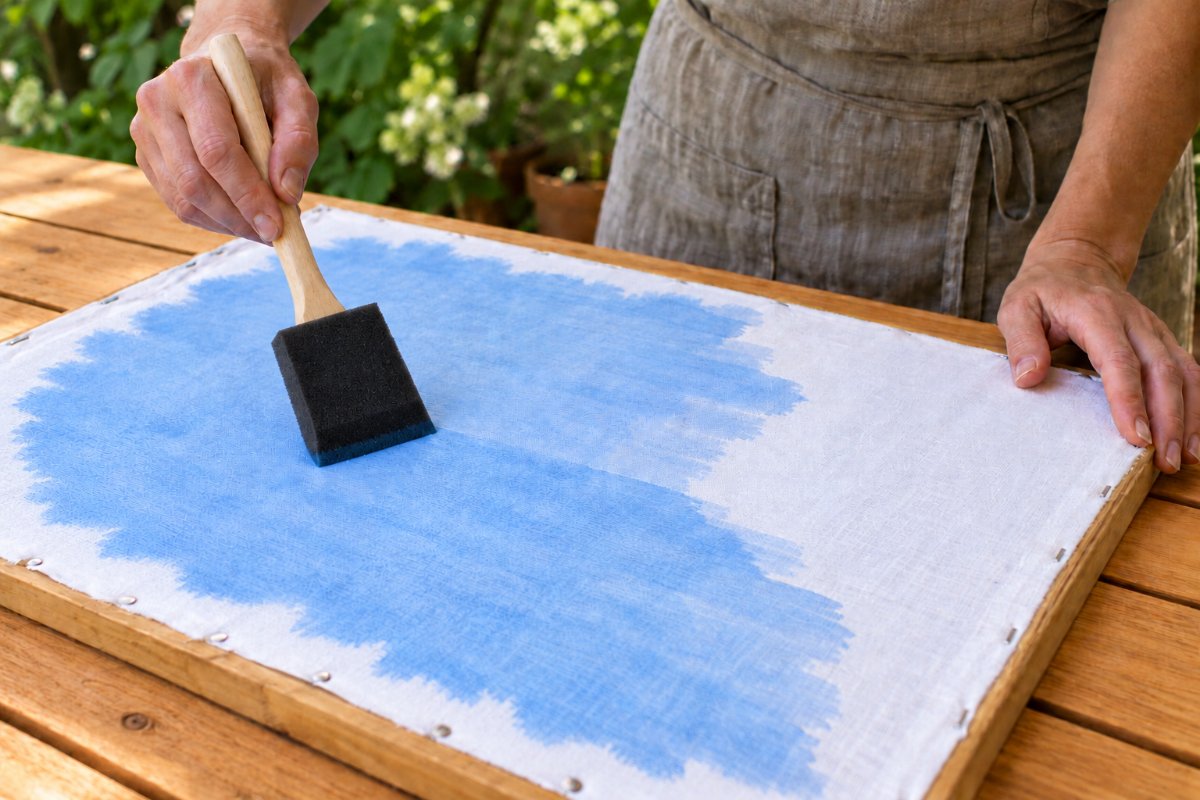
2. Apply: Apply the dye evenly with a brush, sponge or roller. You do not need a frame: that is just the professional version. You can simply lay the fabric flat on the table. If you do, be sure to protect the tabletop with paper or plastic sheeting. Blot areas that are too wet with a paper towel, otherwise water marks will appear during exposure.
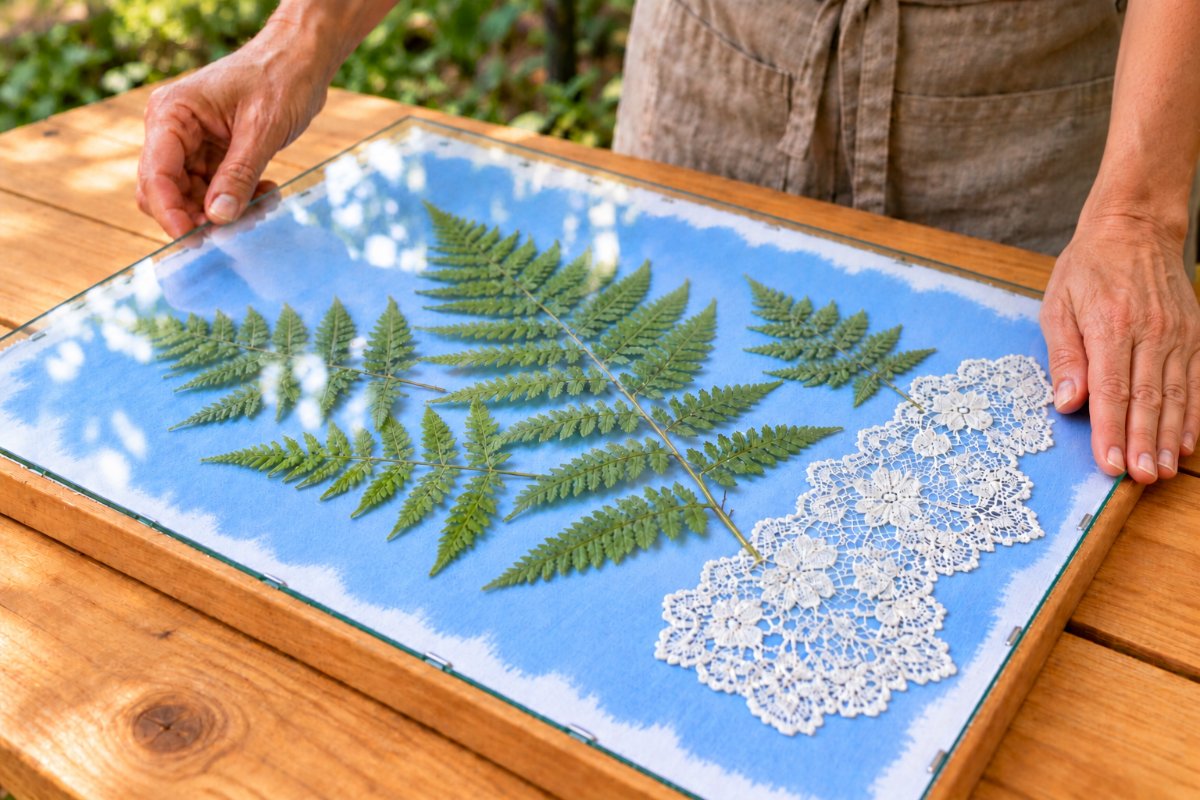
3. Place your motif: Lay your motif on the still damp surface and weigh it down with the glass.
4. Expose: Out into the sun! Depending on the shade this takes 10 minutes to an hour, black takes the longest. The sun is strongest between 10 am and 3 pm. A quick test on a small sample shows you the right time.
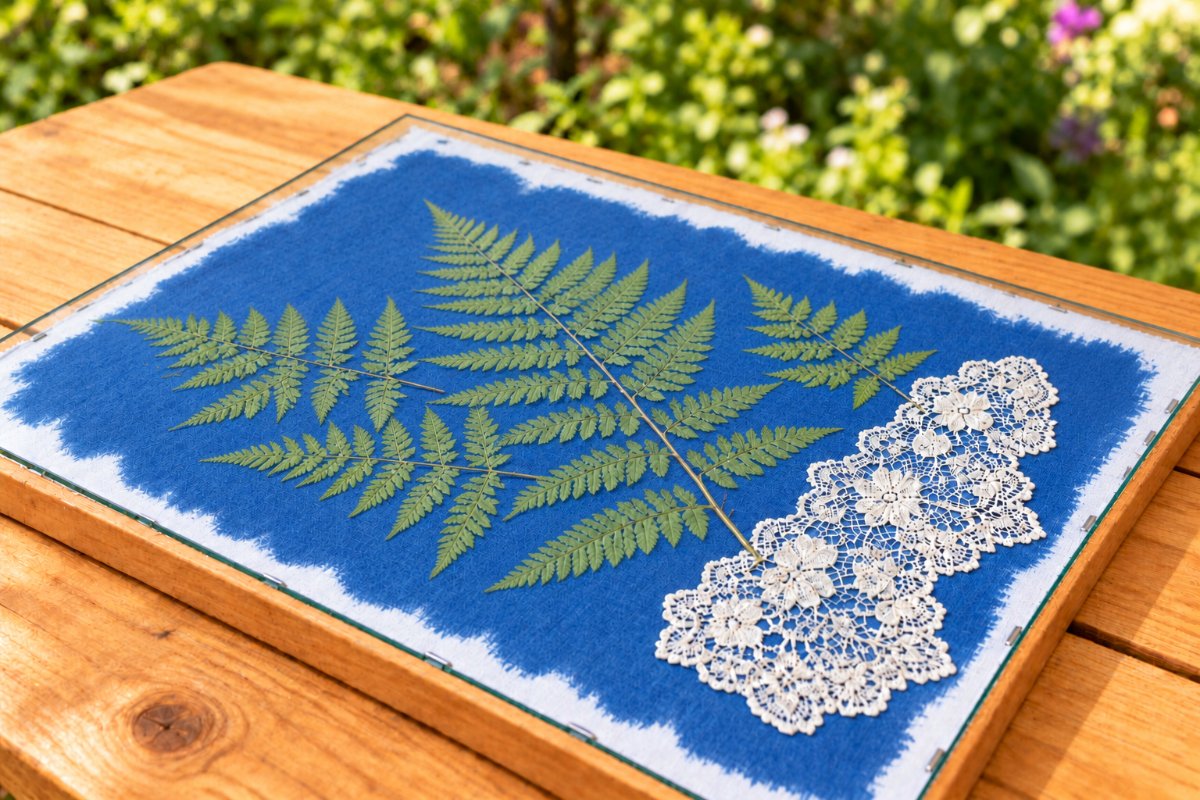
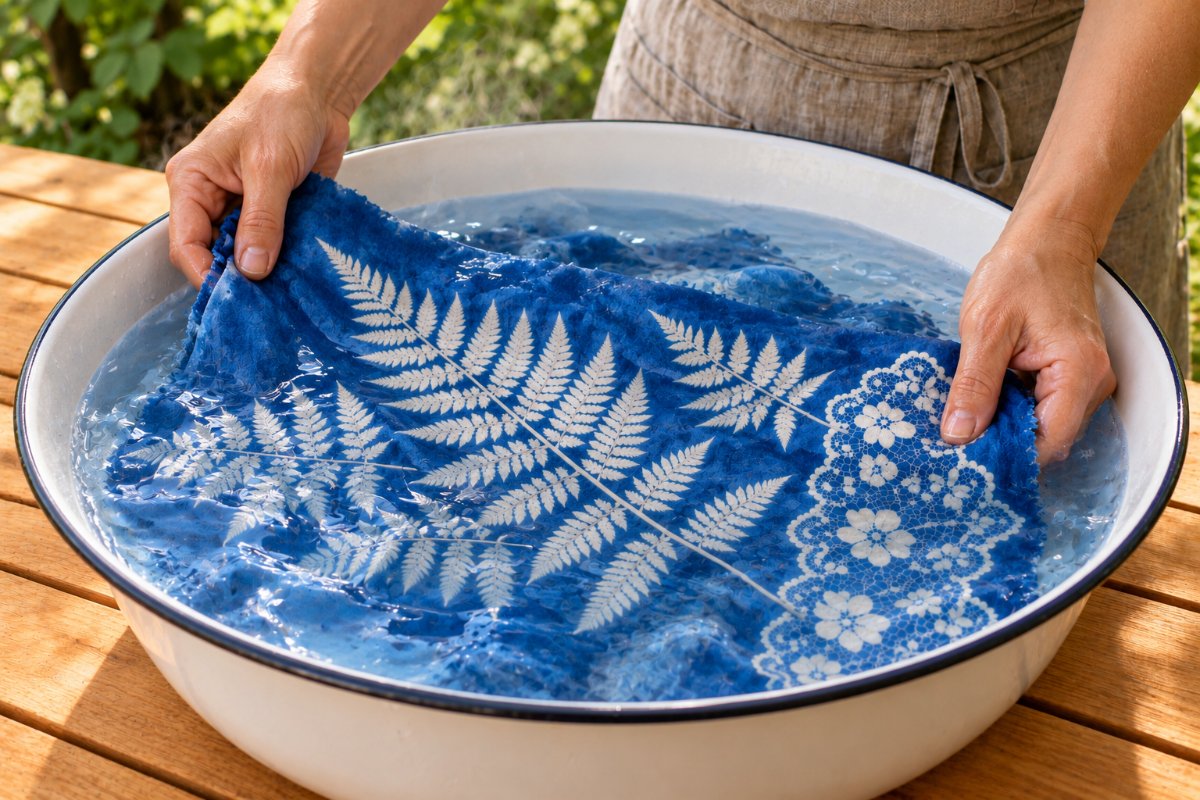
5. Rinse: Remove the motif and wash your piece thoroughly in water as hot as possible. SolarFast Wash gives you extra clean white areas. Fabric can go in the washing machine, wash paper by hand for at least 10 minutes.
6. Done: No ironing, no oven, no dryer. Your print is immediately wash-fast, light-fast and stays soft to the touch.
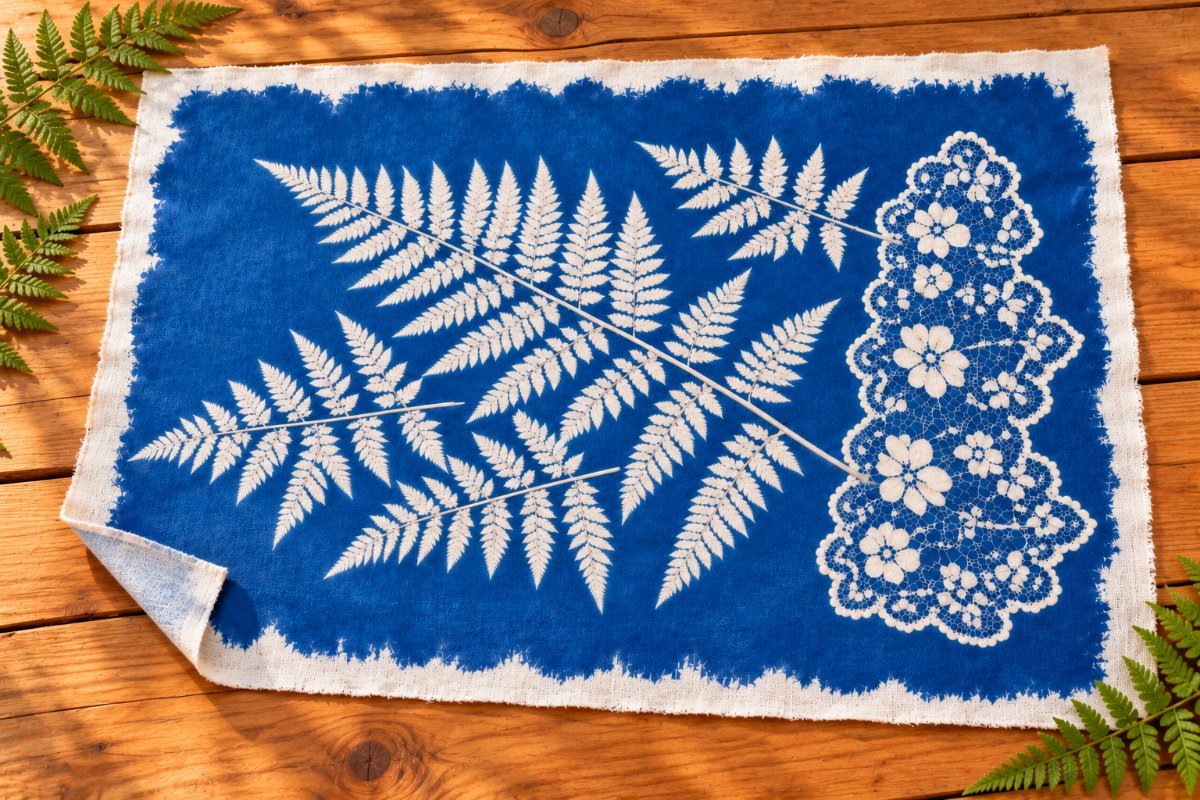
Cyanotype or SolarFast? The comparison
| Cyanotype | SolarFast | |
|---|---|---|
| Colours | Prussian blue (can be toned) | 14 shades, can be mixed |
| Preparation | Mix two chemicals | Ready to use from the bottle |
| Surface | Paper and natural fibres | Paper and natural fibres |
| Light | Sun or UV lamp | Sun or UV lamp |
| Made permanent by | Rinsing in water | Rinsing in hot water, optionally with SolarFast Wash |
| Ideal for | The classic blue look and art on paper | Colourful motifs, textile design and screen printing |
In short: if you love the classic deep blue look, go for cyanotype. If you want to bring in colour, choose SolarFast.
Extra tip: SolarFast in the darker months
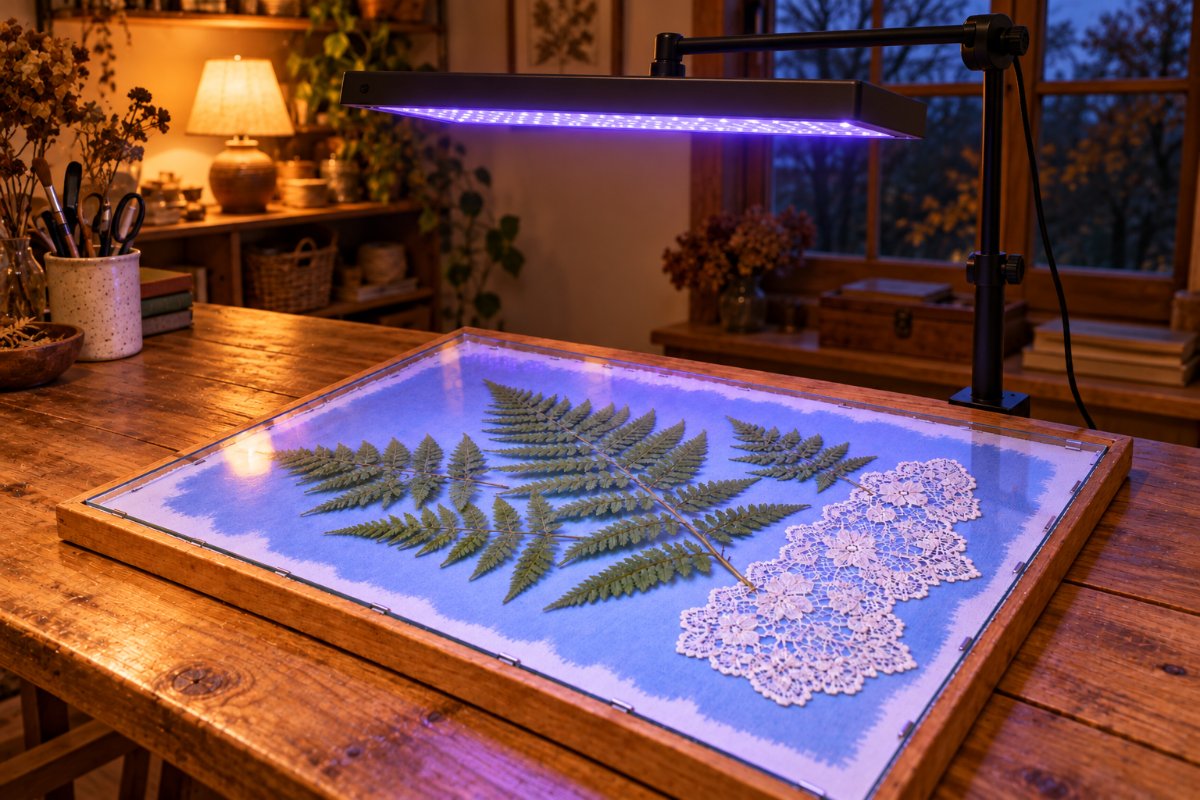
From October to March the sun is often not strong enough. The colours then stay pale or develop only slowly. Expose on a clear day around midday and allow considerably more time. A UV lamp (around 365 nm) works reliably, for example a UV nail lamp or a UV LED strip. Behind window glass it also works, but it takes considerably longer.
Not just for sun prints
SolarFast is also great for painting, stamping, tie-dye or screen printing. With SolarFast Thickener the liquid dye becomes creamy and prints sharp outlines. The best part: the dye does not dry in the screen, because it only becomes permanent in the sun.
Conclusion
SolarFast is the easiest way to colourful sun prints: apply, expose, rinse. No mixing, no heat and 14 colours you can combine freely.
Many basics apply to both techniques. If you have not read Part 1 yet, take a look at Painting with Sunlight, Part 1: Cyanotype.
Good luck!